
The Complete Guide To Caravan Cooling
In This Section
Staying cool in your caravan during an Australian summer isn’t just about comfort, it’s about survival. With temperatures regularly hitting 40°C+ and humidity making it feel even worse, you need a cooling strategy that matches your travel style, power setup, and budget.
The cooling landscape for caravanners has exploded in recent years. You’ve got everything from basic 12V fans that sip power to full reverse-cycle systems that’ll keep you comfortable in any weather. The trick is understanding which option works best for your situation.
Understanding Your Cooling Options
Caravan cooling falls into distinct categories, each with different power requirements, effectiveness, and use cases. The key is understanding how each technology works and where it fits in your overall strategy.
Power considerations: Your electrical system determines what’s possible. 12V systems run off house batteries, while 240V systems need generator power or mains connection. This single factor eliminates many options for off-grid travellers.
Climate factors: Humidity kills evaporative cooling effectiveness. Extreme temperatures overwhelm basic fans. Coastal areas need different solutions than inland deserts.
Usage patterns: Full-time travellers have different needs than weekend warriors. People who predominantly stay in caravan parks can use different technology than free campers.
| Cooling Type | Power Source | Cooling Method | Best Conditions | Typical Cost |
|---|---|---|---|---|
| 12V Fans | House battery | Air circulation | All conditions | $30-150 |
| Evaporative | 12V/240V | Water evaporation | Low humidity only | $200-600 |
| Portable AC | 240V only | Refrigeration | All conditions | $800-1600 |
| Rooftop ACMost Popular | 240V only | Refrigeration | All conditions | $1500-3500 |
| Reverse Cycle | 240V only | Heat pump | All seasons | $2500-5000 |
12V Fans: Your Base Layer
Every caravan needs good 12V fans, regardless of what other cooling you install. They’re your foundation layer that works completely off-grid with minimal power draw.
How they work: Simple air circulation. They don’t actually cool the air, but moving air feels cooler on your skin and helps with heat dissipation through evaporation of perspiration.
Power consumption: 1-4 amps depending on size and speed settings
Effectiveness: Limited by ambient temperature. In 45°C heat, fans just move hot air around. Most effective under 35°C or when combined with other cooling methods.
Pros and Cons
Pros:
- Incredibly low power consumption allows all-night operation
- Work completely off-grid from house batteries
- Nearly silent operation won’t disturb sleep
- Cheap to buy, install, and maintain
- Create essential cross-ventilation for heat removal
- Multiple mounting options (ceiling, wall, portable)
Cons:
- Don’t actually cool air, just circulate existing temperature
- Limited effectiveness in extreme heat above 40°C
- Useless in high humidity without other cooling methods
- Need multiple units for larger caravans
- Can’t overcome poor insulation or heat gain
Best for: Everyone. Seriously, every caravan needs good 12V fans as the foundation of their cooling strategy, regardless of what else you install.
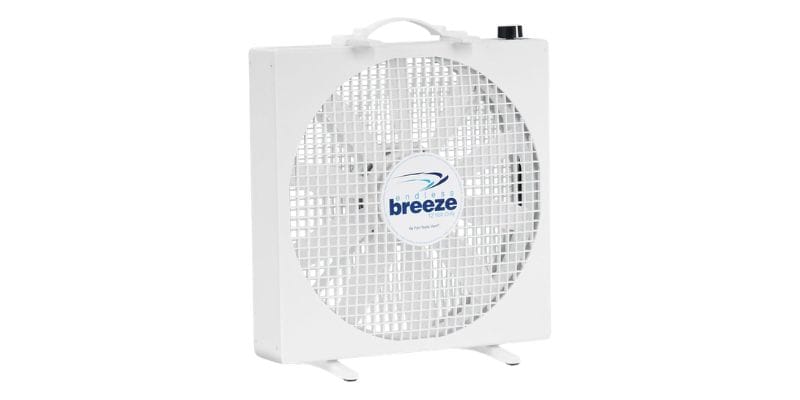
~$129
Position fans strategically to create cross-ventilation. One pulling cool air in from the shaded side, another pushing hot air out the sunny side. The Companion 12V Oscillating Fan~$69 offers solid performance at budget pricing.
Mount ceiling fans so they push hot air up and out rather than just circulating it around the caravan. This creates a chimney effect that actually removes heat.
Evaporative Coolers: Desert Champions
Evaporative coolers work like nature’s air conditioning, using water evaporation to actually cool the air rather than just move it around. They’re the sweet spot between power consumption and cooling effectiveness, but only work in the right conditions.
How they work: Hot dry air passes through water-soaked cooling pads. As water evaporates, it absorbs heat energy from the air, cooling it by 5-15°C depending on humidity levels.
Power consumption: 3-8 amps on 12V systems, some 240V models draw 2-4 amps
Effectiveness: Completely dependent on humidity. Outstanding in dry conditions under 40% humidity, marginal at 50-60%, completely useless above 60% humidity.
Pros and Cons
Pros:
- Actually cool air temperature, not just air movement
- Much lower power draw than refrigerated air conditioning
- Add beneficial moisture to very dry air
- Many models run on 12V house battery systems
- Relatively affordable compared to air conditioning
- Work exceptionally well in desert and inland conditions
Cons:
- Completely useless above 60% humidity levels
- Need constant water refilling, up to 10L per day
- Can make existing humidity problems much worse
- Limited cooling effectiveness above 40°C ambient temperature
- Require maintenance of cooling pads and water pumps
- Water quality affects performance and pad life
Best for: Dry inland areas, desert travel, anyone spending significant time in arid regions where humidity consistently stays below 50%. Useless on the coast.
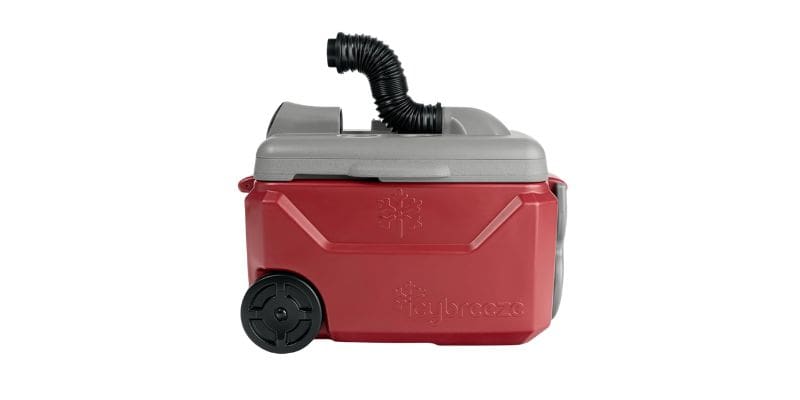
~$399
Check humidity levels before considering evaporative cooling. In Darwin during the wet season, you’re wasting your time. In Alice Springs or the Pilbara, they’re brilliant. The Companion Aqua Air 12V~$299 offers good value for occasional use in the right conditions.
Always check local humidity levels before relying on evaporative cooling. Above 60% humidity, these systems become counterproductive and can make your caravan uncomfortably muggy.
Portable Air Conditioners: Flexible Power
True refrigerated air conditioning in a portable package. These units provide genuine cooling rather than just heat management, but come with significant power and space requirements.
How they work: Complete refrigeration cycle with compressor, condenser, and evaporator. They compress and expand refrigerant to remove heat from inside air and dump it outside via exhaust hose.
Power consumption: 8-15 amps on 240V, requiring minimum 2000W generator or mains power
Effectiveness: Excellent cooling capacity, typically 2.5-4kW cooling power. Works in any humidity or temperature conditions.
Pros and Cons
Pros:
- True refrigerated air conditioning with substantial cooling power
- Portable between caravan, annex, or even outdoor areas
- No permanent installation or roof modification required
- Many models include reverse-cycle heating function
- Works effectively in any humidity conditions
- Good option for renters who can’t modify their caravan
Cons:
- Require 240V power from generator or mains connection
- Take up valuable interior floor space when operating
- Exhaust hose must be vented outside, limiting positioning
- Less efficient than properly installed split systems
- Compressor noise can be intrusive, especially at night
- Require condensate drainage or collection
Best for: People who regularly have 240V power available, renters who can’t install permanent systems, anyone wanting flexible cooling in annexes, mixed-use scenarios.
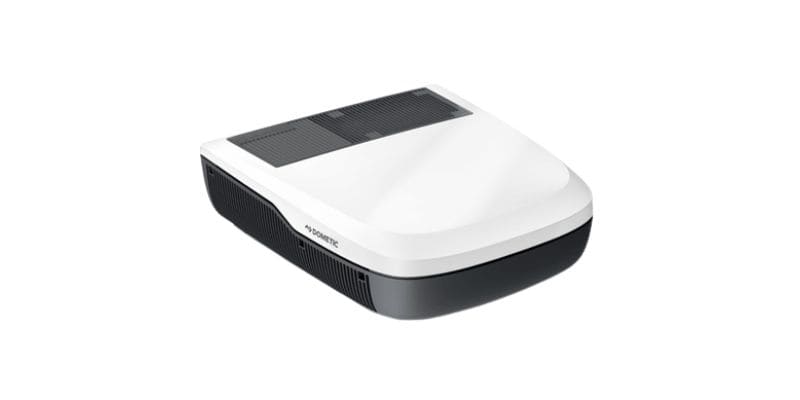
~$1,399
You’ll need a minimum 2000W generator to run most portable air conditioners reliably. Consider starting surge current when sizing your generator. The Omega Altise 4.1kW Portable~$899 provides good cooling power for budget-conscious buyers but requires careful generator sizing.
Rooftop Air Conditioners: The Popular Choice
Purpose-built caravan air conditioners that mount permanently on your roof. These are the most popular cooling solution for serious caravanners who prioritise comfort and regularly access powered sites.
How they work: Split system design with condenser unit mounted on roof and evaporator inside, connected by refrigerant lines running through the roof cavity. Complete self-contained system.
Power consumption: 8-12 amps on 240V depending on capacity and model efficiency
Effectiveness: Excellent cooling capacity matched to caravan size, typically 2.2-3.4kW cooling power. Designed specifically for the mobile environment.
Pros and Cons
Pros:
- Excellent cooling capacity efficiently matched to caravan size
- Completely out of the way, preserves all interior space
- Designed specifically for vibration and mobile use
- Many models include efficient reverse-cycle heating
- Professional appearance integrates with caravan design
- Quieter operation compared to portable units
Cons:
- Require 240V power from generator or mains connection
- Expensive purchase price plus professional installation costs
- Add significant weight and wind resistance to roof
- Permanent roof modification required, affecting resale
- Professional installation strongly recommended
- Limited serviceability and parts availability on remote roads
Best for: Regular caravan park users, full-time travellers prioritising comfort, anyone with permanent caravans, people with reliable 240V power access.
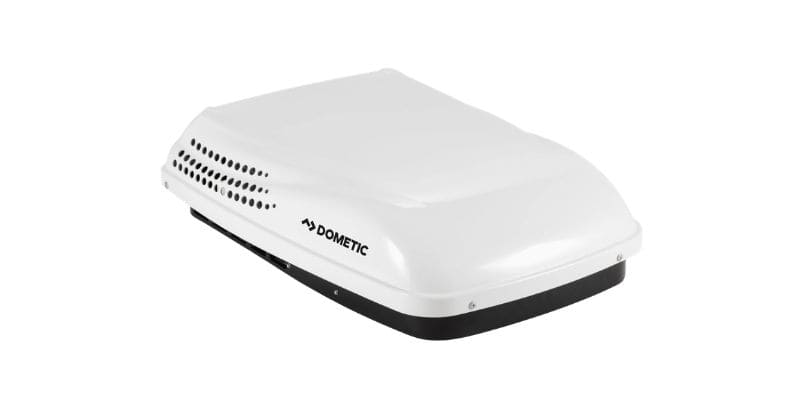
~$2,299
Factor in professional installation costs ($800-1200) unless you’re confident cutting precise holes in your roof and handling refrigerant lines. The Truma Saphir Comfort RC~$2,799 offers premium features including smartphone control and superior German build quality.
Reverse-Cycle Systems: Premium Efficiency
The premium tier of caravan climate control. These heat pump systems provide both efficient heating and cooling, making them ideal for year-round travellers who experience temperature extremes in both directions.
How they work: Heat pump technology that can reverse refrigerant flow direction to either heat or cool. Much more efficient than resistive heating elements while providing the same cooling as standard air conditioners.
Power consumption: 6-10 amps on 240V for cooling, similar consumption for heating (significantly less than resistive heaters)
Effectiveness: Outstanding efficiency for both heating and cooling modes. Cooling performance matches standard air conditioners while heating performance exceeds resistive heaters.
Pros and Cons
Pros:
- Excellent energy efficiency for both heating and cooling
- Quieter operation than standard air conditioning units
- Superior temperature control and consistency
- Lower overall power consumption reduces generator requirements
- Can operate on smaller generators than resistive heating
- Year-round utility makes investment worthwhile
Cons:
- Significantly higher upfront purchase cost
- More complex installation requiring skilled technicians
- Still require 240V power source for operation
- More sophisticated components increase potential failure points
- Heating efficiency drops substantially in extreme cold below 5°C
- Higher repair costs if components fail
Best for: Year-round travellers experiencing both hot summers and cold winters, people wanting maximum efficiency, premium caravan builds, anyone prioritising comfort and willing to pay for it.
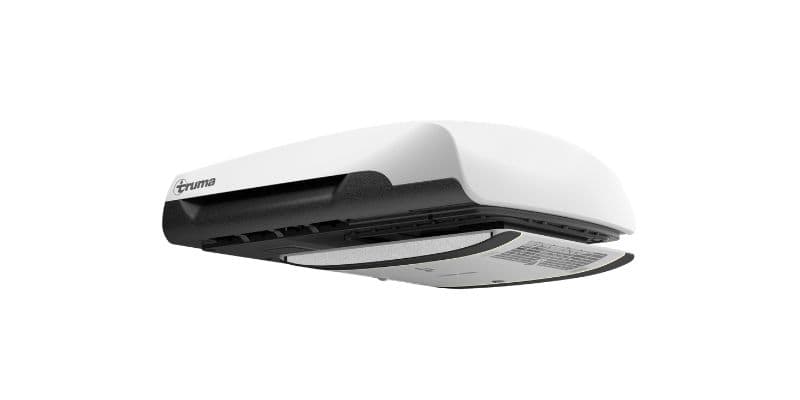
~$3,299
Heat pump heating efficiency drops significantly below 5°C ambient temperature. You’ll still need backup heating for really cold nights in alpine areas or winter camping.
Choosing the Right System for Your Travels
The best cooling system depends entirely on your travel style, typical destinations, and electrical setup. Most experienced caravanners end up with layered solutions for different situations rather than relying on a single technology.
For off-grid focused travellers: Start with excellent 12V fans as your base layer. Add evaporative cooling for dry inland areas where humidity stays low. Consider battery-powered personal coolers for extreme conditions when even evaporative cooling isn’t enough.
For caravan park tourists: Rooftop air conditioning provides the best combination of cooling power, convenience, and space efficiency. Back it up with quality 12V fans for mild weather operation and power-free comfort during setup.
For mixed travel styles: The combination approach works best. Quality 12V fans as your foundation layer, portable air conditioning for when you have generator or mains power available, and evaporative cooling for dry areas when you need more than fans but can’t run air conditioning.
For year-round travellers: Reverse-cycle systems provide the best value when you need both heating and cooling throughout the year. The efficiency gains offset the higher purchase cost over time.
Power system considerations: Your electrical system determines what’s possible. 12V systems limit you to fans and small evaporative coolers. 240V capability opens up air conditioning options but requires generator investment or caravan park dependency.
Consider your typical destinations when choosing systems. Coastal areas with high humidity make evaporative cooling completely useless, while dry inland areas make them shine. Plan your cooling strategy around where you actually travel.
- 12V fans are essential for every caravan as the foundation cooling layer
- Evaporative coolers work brilliantly in dry conditions but are useless when humid
- Air conditioning provides the best cooling but requires 240V power systems
- Your travel destinations and power setup should guide your cooling choice
- Most experienced caravanners use multiple cooling systems for different situations
- Consider power requirements carefully when planning your electrical system capacity
Comment (1)