
The jockey wheel is one of those bits of gear you never think about until yours bends, sinks into the sand, or makes hitching up a two-person wrestling match. It’s the small wheel on the A-frame that supports and steers the nose of your van once it’s unhitched, and the right one makes setting up and packing down genuinely easier. This guide covers the different types, what to look for, and the best caravan jockey wheels in Australia for 2026, from a sensible heavy-duty upgrade to full off-road and electric options.
Do You Even Need to Upgrade?
Here’s the honest answer most retailers won’t lead with: the jockey wheel that came with your van is probably fine for sealed caravan parks and the driveway at home. If it winds up and down smoothly, holds the nose steady, and isn’t bending, you don’t need to spend a cent.
You should think about an upgrade if any of these sound familiar. Your wheel digs into grass, gravel or sand and won’t roll. The shaft or clamp is bending under the weight of a heavy nose. You’re heading off the blacktop and need something that can take corrugations and soft ground. Or hitching and manoeuvring has become a genuine struggle, especially if you’ve got a bad back or you’re often setting up solo.
Match the solution to the actual problem. Sinking in soft ground points to a bigger or pneumatic wheel. A bending wheel means you need a heavier-duty unit rated above your tow ball weight. A manoeuvring struggle is where electric movers come in. There’s no point buying a $500 off-road wheel if you only ever stay in powered parks.
What To Look For When Buying
- Load rating: Match it to your loaded tow ball weight and then some. Light vans are fine with a standard wheel; heavy off-road vans need a heavy-duty or off-road unit rated well above their ball weight so it doesn’t bend.
- Wheel size and type: A bigger wheel rolls more easily. Solid rubber won’t go flat and is ideal for sealed sites. A large pneumatic (inflatable) tyre spreads the load and floats over sand and grass, but needs the occasional pressure check.
- Side-wind vs top-wind: A side-winding handle lets you raise and lower the van without fouling on stone guards, toolboxes or jerry can holders, which matters on a crowded off-road A-frame. Top-wind is simpler but can be awkward to reach.
- Clamp and bracket: Most vans have a welded swivel bracket. Check the shaft diameter (commonly 48mm) and bracket type before buying a replacement so it actually fits.
- Swing-up and removable: Being able to swing the wheel up out of the way (or remove it) protects it from damage and gives ground clearance off-road. A removable handle stops it getting bent or stolen.
- Build quality: Sealed bearings and a galvanised or rust-resistant finish last far longer, especially around salt, sand and coastal damp.
Buy for your worst surface, not your driveway. If you’ll ever set up on a beach, a paddock or a soft bush camp, choose a big pneumatic or off-road wheel now. The day you sink to the axle of a small solid wheel is the day you’ll wish you had.
The Best Jockey Wheels For 2026
Prices vary by load rating and wheel size, so treat these as a guide and match the unit to your van.
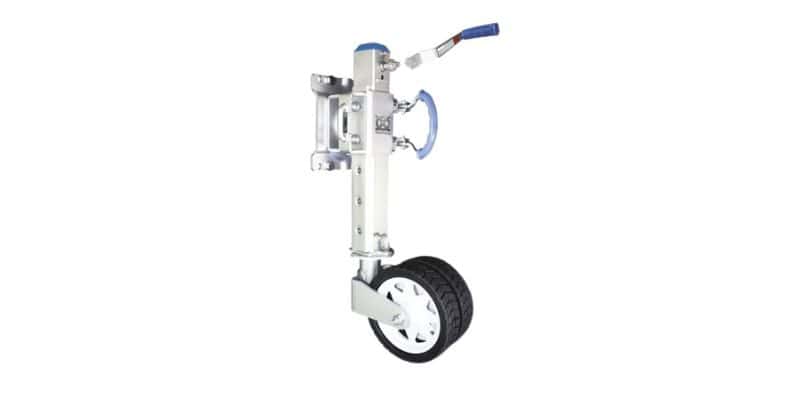
✔ Pros
- Toughest option on the market
- Dual tyres float on sand and grass
- Side-wind handle clears a crowded A-frame
- Aussie owned, salt-spray tested
✗ Cons
- The most expensive option here
- Overkill for a light, on-road-only van
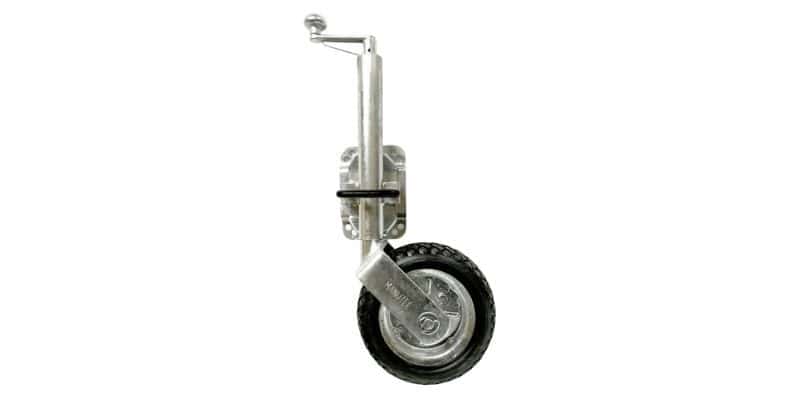
✔ Pros
- Excellent value
- Rust-resistant galvanised finish
- Sealed bearings for long life
- Side-wind, fits standard brackets
✗ Cons
- Solid wheel still sinks in soft sand
- Not as tough as a dedicated off-road unit
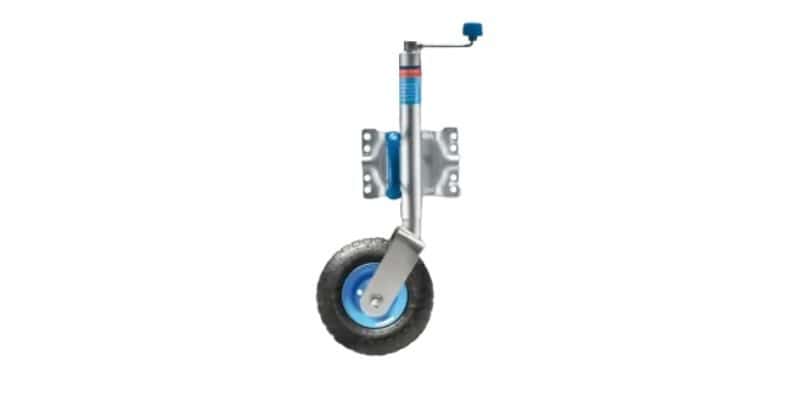
✔ Pros
- Floats on sand and grass
- Cheap and effective
- Big, forgiving footprint
✗ Cons
- Can go flat, needs checking
- Less durable than a solid off-road wheel
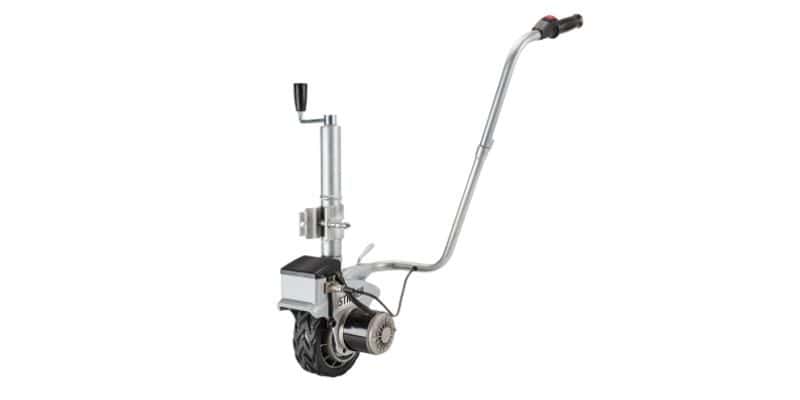
✔ Pros
- Saves your back at home and at camp
- Powered forward and reverse
- Automatic brake and freewheel mode
✗ Cons
- Single-axle vans only
- Firm surfaces and gentle inclines only
- Premium powered units cost much more
Also Worth A Look
Don’t overlook the wheel you already have: most vans ship with a perfectly good standard 8″ Manutec, and there’s no reason to replace it until it’s bending or sinking. AL-KO swivel-bracket wheels are a handy option with a quick-release that lets you swing the wheel away without tools. If you’ve got a heavy tandem-axle van and grass is your enemy, a full caravan mover (such as the Purpleline range) drives the main wheels directly and gives far more traction than any jockey wheel. And a cheap, genuinely useful add-on is the Jockey Wheel Buddy (around $75), a chock-style base that stops the wheel sinking or rolling once you’re set up.
Quick Comparison
| Type | Price | Load / Suits | Best For |
|---|---|---|---|
| ARK XO Series Pick | ~$350–700 | 350–750kg | Going off the blacktop |
| Manutec 10″ Heavy Duty Value | ~$100–180 | Up to 1000kg | Sensible all-round upgrade |
| 10″ Pneumatic | ~$80–150 | Soft ground | Beach & grass camps |
| Electric Mover | ~$300–600 | Single-axle | Manoeuvring at home |
| Standard factory wheel | ~$30–80 | Light | Sealed sites only |
The Verdict
If you’re heading off-road, the ARK XO Series is the one to beat: tough, versatile, and built for soft ground and corrugations. Just pick the rating above your tow ball weight. If you’re mostly on the blacktop or in lighter off-road country and your factory wheel is past it, the Manutec 10″ Heavy Duty is the sensible-money upgrade. Camp on sand and grass a lot? A cheap 10″ pneumatic will float where a solid wheel digs in.
An electric mover is a convenience rather than a necessity, and a good one if manoeuvring is your pain point and your van’s single-axle, but mind the surface and incline limits. And if your current wheel is doing the job, the best upgrade is no upgrade at all. Whatever you run, wind it fully up and lock it before every tow.
A jockey wheel is for supporting and steering the unhitched nose, not for lifting the van to change a wheel, that’s a job for a proper jack. And always wind the jockey wheel fully up and lock it before towing. A wheel that drops during transit can dig into the road and cause a loss of control.
- Your factory jockey wheel is fine for sealed sites; only upgrade if it’s bending, sinking or hard to use.
- Match the load rating to your tow ball weight, and the wheel type to your worst surface.
- ARK XO is the off-road benchmark; the Manutec 10″ HD is the value all-rounder.
- A 10″ pneumatic floats on sand and grass for very little money.
- Electric movers suit single-axle vans on firm ground; wind any jockey wheel up and lock it before towing.

Comment (1)