
The Complete Buyers Guide To Caravan Air Conditioners
In This Section
A caravan air conditioner is the difference between enduring an Aussie summer and enjoying it. This guide walks through rooftop versus under bunk units, how much cooling your van actually needs, what it takes to run one off grid, and our top picks for 2026.
Rooftop vs Under Bunk Air Conditioners
Almost every caravan air conditioner sold in Australia falls into one of two camps, and the choice shapes everything else.
Rooftop units mount on the roof and blow cool air down through a central ceiling outlet. They are by far the most common, the easiest to fit, and they keep all the weight and noise up and out of your living space. The trade off is that 30 to 44 kilos sitting high on the roof raises your centre of gravity and eats into payload.
Under bunk units (also called under bench) hide in a bed base or a large cupboard and push air through ducting. They put the weight low and central, which is kinder to towing and handling, and they run quieter in the bedroom. The catch is that they swallow a chunk of storage and cost you a cupboard.
For most big lappers a rooftop unit is the right call. Go under bunk if you are chasing better tow stability, a quieter night, or you have an off road van where keeping weight off the roof genuinely matters.
How Much Cooling Does Your Van Need?
Cooling capacity is measured in kilowatts, and matching it to your van length is the single most important decision you will make. Get it wrong and the unit runs flat out on a 40 degree afternoon and never quite catches up.
- Up to 5.5m: around 2.4 to 3.0kW is plenty.
- 5.5m to 7m: aim for 3.0 to 3.4kW.
- 7m and up, or a hot poorly insulated van: go 3.5 to 4.0kW.
Oversizing is not the safe option people assume. A unit that is too big wastes roof weight and power, and on a modest setup that power headroom matters more than you think.
A dark van in full sun with big untinted windows cools like a much larger van. If yours sits in the sun all day, size up one step and shade the windows. Our insulation and shade guide covers the cheap wins.
What to Look For When Buying
- Cooling capacity: match the kilowatts to your van length as above. This is the one that matters most.
- Reverse cycle: nearly every quality unit now heats as well as cools, and reverse cycle heating is far more efficient than a fan heater on a cold desert night. Worth having.
- Inverter vs fixed speed: an inverter unit varies its compressor speed, so it starts softly, runs quieter, holds temperature steadily and sips less power. Fixed speed units are cheaper but cruder, cycling on and off at full noise.
- Power draw and off grid ability: this is the big one. A fixed speed unit needs mains power or a generator. An inverter unit with a soft start is the only kind you can realistically run on battery and solar, and even then you need a serious setup.
- Weight: lighter matters on smaller vans and for tow stability. The lightest rooftops are around 34 kilos, the heaviest closer to 44.
- Ducted vs non ducted: non ducted blows from one central roof outlet and is cheaper and simpler. Ducted spreads the air through the roof to several outlets for more even cooling in a long van.
- Noise: you sleep under it, so it counts. Inverter units are quieter at part load, and under bunk units are quieter again in the bedroom.
Our Top Picks for 2026
We have weighed up the caravan air conditioners worth buying in Australia this year, from the premium inverter rooftops to the value option and the best under bunk unit. Here are our picks.
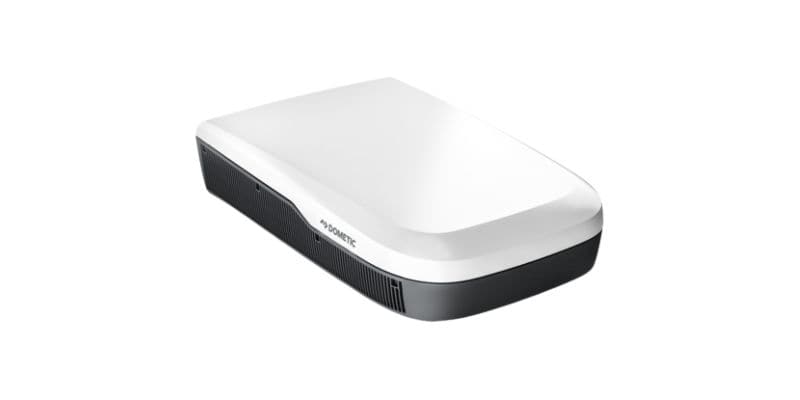
✓ Pros
- Strong cooling suits vans 5.5m to 7m
- Inverter, so quiet and off grid capable
- Excellent national support
- Reverse cycle for cold nights
✗ Cons
- Premium price
- Full off grid running still needs a big battery and inverter
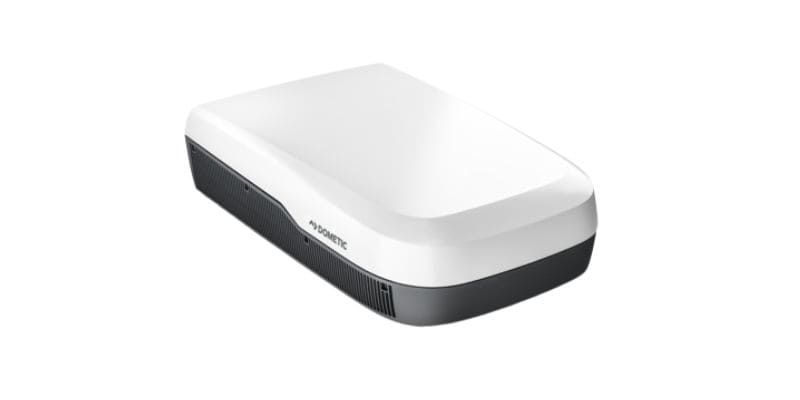
✓ Pros
- Industry leading rooftop cooling output
- Quiet inverter operation
- Ideal for big family vans and hot climates
✗ Cons
- Heaviest FreshJet at 43.6 kilos
- Overkill and wasted power on a small van
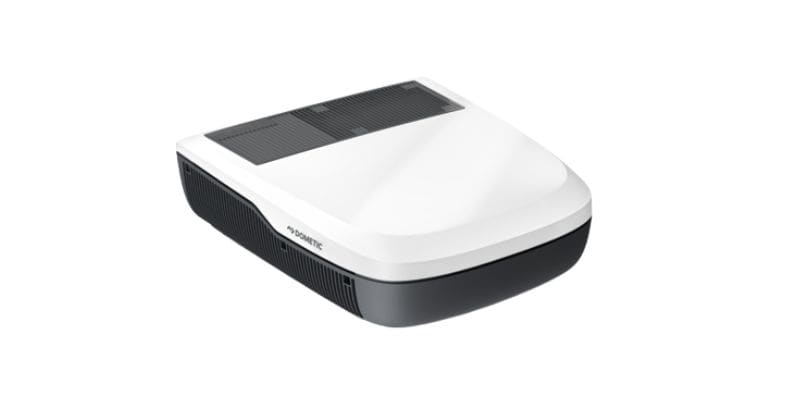
✓ Pros
- Lightest FreshJet, kind to payload and stability
- Cheapest of the range
- Inverter, quiet and off grid friendly
✗ Cons
- Lower heating output
- Not enough for big or very hot vans
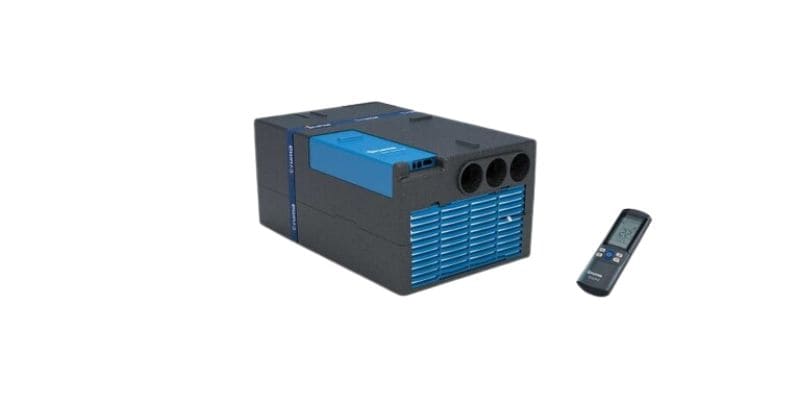
✓ Pros
- Low centre of gravity, better towing
- Very light and quiet in the bedroom
- Modest power draw around 4.2 amps
✗ Cons
- Eats a cupboard or bed base space
- 2.4kW caps it at smaller vans
- More involved to install
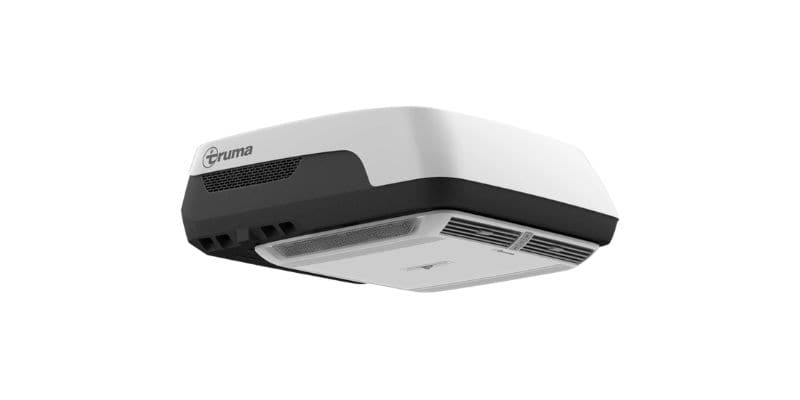
✓ Pros
- Excellent build and reliability
- Light and quiet
- Off road variant available
✗ Cons
- Lower cooling for the money than a FreshJet Pro
- Better suited to smaller and mid vans
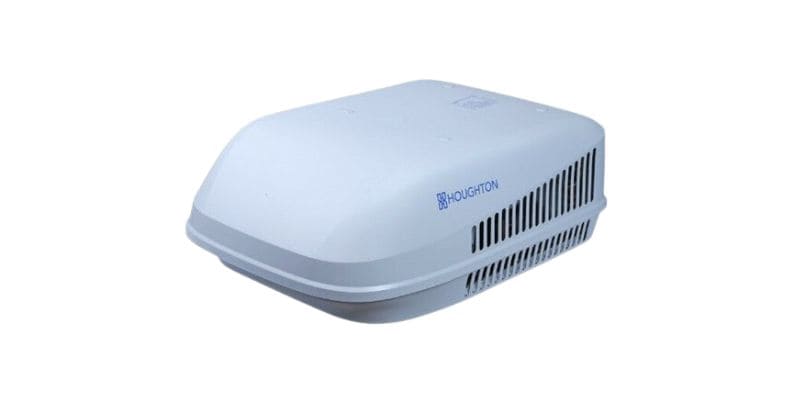
✓ Pros
- Strong cooling for the price
- Cheap parts, huge market presence
- Good on powered sites
✗ Cons
- Fixed speed, poor off grid candidate
- Noisier on and off cycling
- Value tier build, not premium
Quick Comparison Table
Here is how the picks compare side by side.
| Unit | Price | Cooling | Type | Weight | Best For |
|---|---|---|---|---|---|
| Dometic FreshJet Pro Best Pick | ~$2,250 | 3.4kW | Inverter rooftop | 41 kg | Most vans 5.5m to 7m |
| Dometic FreshJet Plus | ~$2,290 | 4.0kW | Inverter rooftop | 43.6 kg | Big or hot vans |
| Dometic FreshJet Lite | ~$2,090 | 3.0kW | Inverter rooftop | 34.4 kg | Smaller vans, weight |
| Truma Saphir Comfort RC Under Bunk | ~$2,040 | 2.4kW | Under bunk ducted | 23.5 kg | Tow stability, quiet |
| Truma Aventa Compact Plus | ~$2,049+ | ~2.4kW | Rooftop | Light | Quality, off road |
| Houghton Belaire HB3400 Value | ~$1,400+ | 3.4kW | Fixed speed rooftop | 38 kg | Powered sites, budget |
Can You Run It Off Grid?
This is where a lot of dreams meet reality. A caravan air conditioner is a heavy electrical load, and running one away from mains power is possible, but only with the right setup and the right unit.
A fixed speed air conditioner is effectively a mains or generator only appliance. Only an inverter unit with a soft start is worth attempting off grid, and even then you want at least 300Ah of lithium and a 2000 to 3000 watt inverter to run it for any real length of time.
If free camping through summer is your plan, buy an inverter unit like the FreshJet Pro, size your battery and solar honestly, and treat a few hours of afternoon cooling as the goal rather than round the clock air conditioning. We break down the full maths, including how a solar blanket can speed up your recharge, in the battery setup guide.
Frequently Asked Questions
Rooftop or under bunk, which is better?
Rooftop for simplicity, easy fitting and keeping storage. Under bunk for lower weight, better tow stability and a quieter bedroom. Most people are happy with a rooftop unit.
Do I really need reverse cycle?
It is worth it. Reverse cycle heating warms the van far more efficiently than a fan heater on a cold desert night, and it costs little extra on most units.
How much power does an air conditioner use?
A lot. Fixed speed units draw a big startup surge and 5 to 7 amps at 240 volts running. Inverter units soft start and settle lower, which is why they are the only ones worth running off battery and solar.
Will one air conditioner cool the whole van?
In most vans up to about 7m, yes, if it is sized correctly and you shade the windows. Very long vans cool more evenly with a ducted unit.
- Match cooling capacity to your van length before anything else.
- The Dometic FreshJet Pro is the best all round pick for most vans, with the Plus for big vans and the Lite for small ones.
- The Truma Saphir Comfort RC is the under bunk choice for tow stability and a quiet night.
- The Houghton Belaire is the value buy for powered sites.
- Only an inverter unit is worth running off grid, and even then you need serious battery and solar.
Comment (1)