
Your dog loves the big lap as much as you do. But 500km of unsealed road with an unrestrained 30kg kelpie bouncing around the back seat? That’s a safety hazard for everyone in the vehicle, the dog included.
Australian road rules vary by state, but the principle is consistent: pets must be restrained or contained so they can’t distract the driver or become a projectile in a sudden stop. Beyond the legal side, the right car setup makes long driving days dramatically more comfortable for your dog and keeps your upholstery intact after months on the road.
Here’s our pick of the best car seats, hammocks, seatbelts, harnesses, and ramps for travelling with pets on the big lap.
Car Seats for Small & Medium Dogs
If your dog is small enough to ride in an elevated car seat, it’s one of the best investments you can make for long driving days. These seats lift your dog up so they can see out the window (which helps with car sickness), keep them contained in one spot, and protect your seats from mud, drool, and hair. Most clip into the seatbelt system and work in the front or back seat.
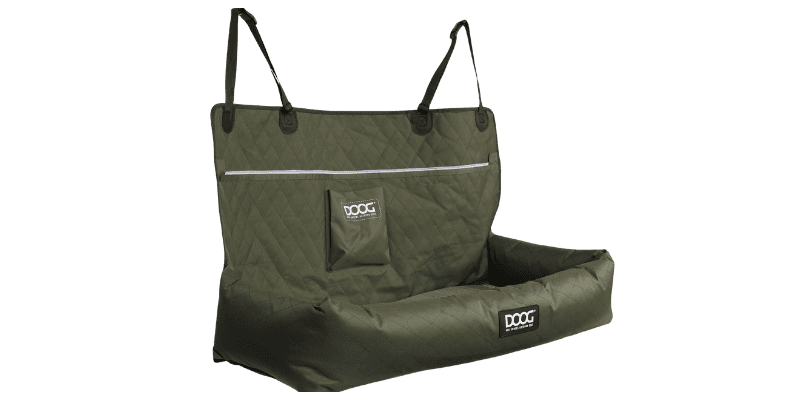
✔ Pros
- Australian designed with quality materials
- Firm base that holds its shape
- High sides for security
- Removable, washable cover
✗ Cons
- Only suits small to medium dogs
- Premium price point
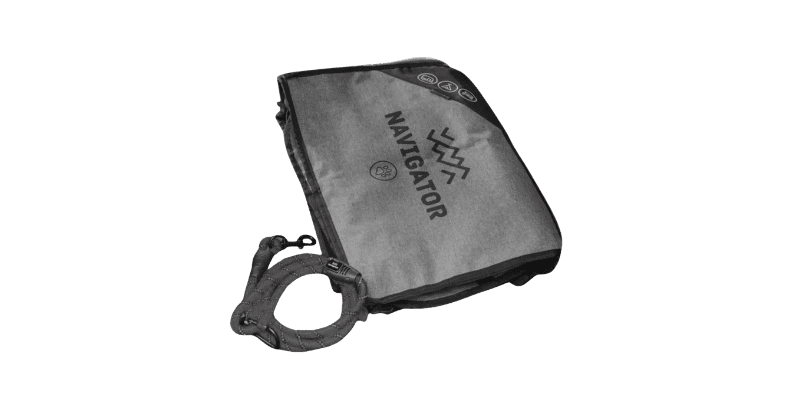
✔ Pros
- Good quality for the price
- Internal tether included
- Packs down flat for storage
✗ Cons
- Not as sturdy as the Doog
- Suits smaller dogs only
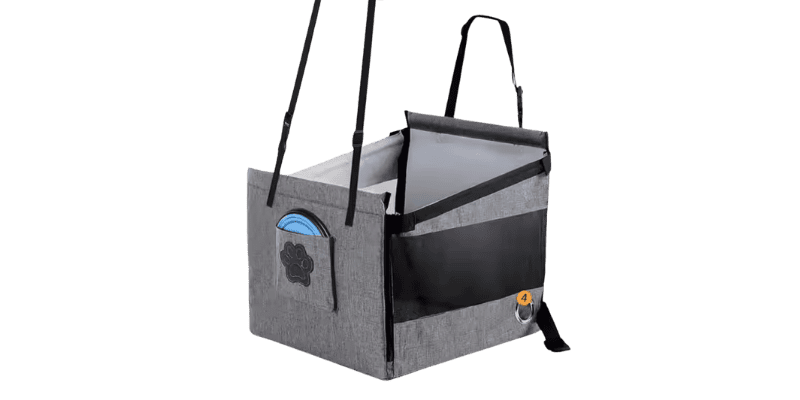
✔ Pros
- Budget-friendly entry point
- Lightweight and easy to install
✗ Cons
- Less durable for long-term use
- May not hold up to months on the road
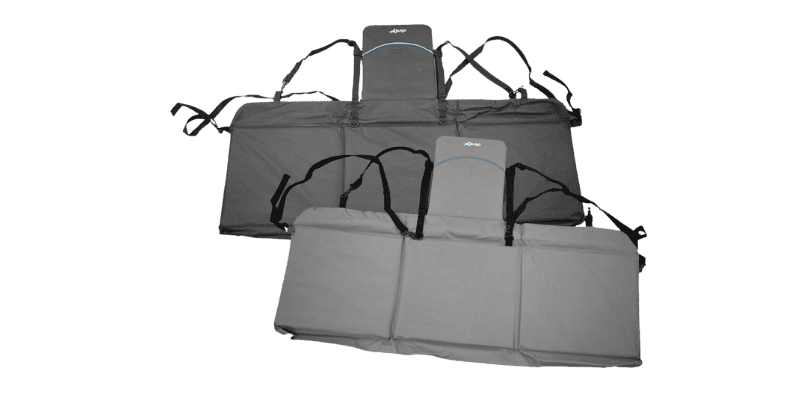
✔ Pros
- Creates a flat, full back seat area
- Great for dogs who lie down on drives
- Adjustable to fit most vehicles
- Padded and comfortable
✗ Cons
- Takes up the entire back seat
- Not a restraint on its own (pair with a seatbelt tether)
Back Seat Covers & Hammocks
If you’ve got a medium to large dog, an elevated car seat isn’t going to cut it. Instead, you want a back seat hammock or cover that protects your upholstery while giving your dog a contained space. Hammock-style covers are the most popular option because they hang from the front and rear headrests, creating a cradle that stops your dog from sliding into the footwell and prevents muddy paws from reaching the back of your front seats.
After months on the road through red dirt, beaches, and bush tracks, your back seat will thank you.
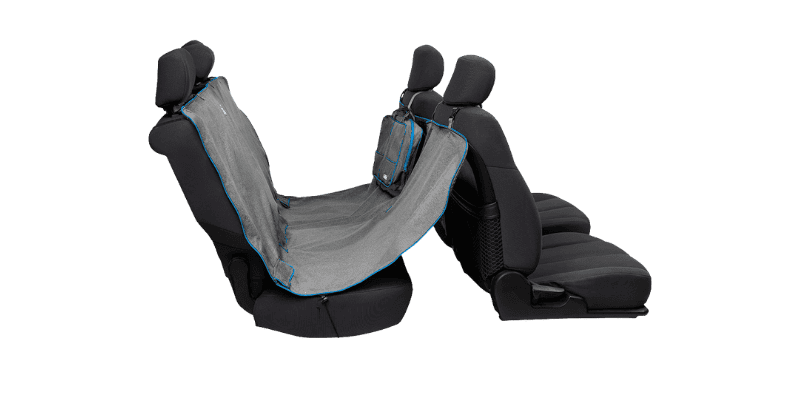
✔ Pros
- Waterproof backing
- Converts between hammock and bench modes
- Secure headrest attachment that doesn’t slip
- Durable enough for extended travel
✗ Cons
- Pricier than basic hammocks
- Can feel warm in summer (no mesh panels)
✔ Pros
- Unbeatable price
- Easy to find at Anaconda stores
- Does the core job well
- Replaceable without guilt
✗ Cons
- Not waterproof
- Lighter fabric won’t last as long
- Attachment points can slip on some seats
A hammock cover works best when paired with a seatbelt tether or harness. The hammock protects your seats and stops your dog sliding into the footwell, but it doesn’t restrain them. Add a short tether clipped to the seatbelt buckle for proper safety.
Dog Seatbelts, Tethers & Travel Harnesses
This is the non-negotiable category. Every state in Australia requires pets to be restrained or contained while travelling in a vehicle. An unrestrained dog is a distraction at best and a 30kg projectile at worst. Even a 10kg dog generates enormous force in a 60km/h collision.
There are two approaches: a dedicated travel harness (which wraps around your dog’s body and clips directly into the seatbelt) or a tether/clip (which attaches your dog’s existing harness to the seatbelt system). Travel harnesses are safer because they distribute the force across the chest. Simple tethers are cheaper and more convenient, but they rely on your dog’s everyday harness being strong enough to take the load in a sudden stop.
Never attach a seatbelt tether to a collar. In a sudden stop, the force goes straight to your dog’s neck. Always use a harness with any tether or seatbelt system.
Travel Harnesses (the safer option)
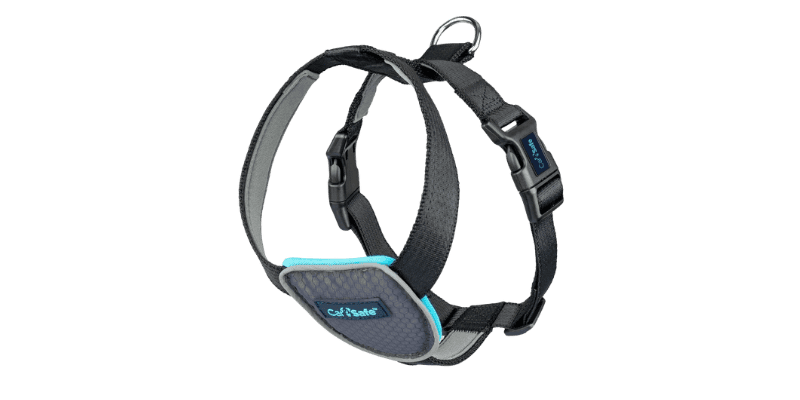
✔ Pros
- Crash-tested for impact safety
- Seatbelt threads directly through (no tether)
- Doubles as a walking harness
- Padded and comfortable for long drives
✗ Cons
- Takes a minute to thread the seatbelt each time
- More expensive than basic tethers
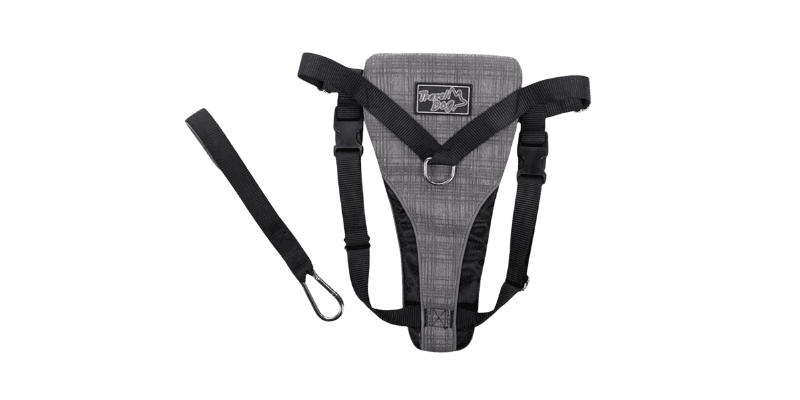
✔ Pros
- Incredibly cheap
- Includes harness and seatbelt clip
- Good for testing whether your dog tolerates a harness
✗ Cons
- Not crash-tested
- Thinner materials and stitching
- Not suitable as a walking harness
Seatbelt Tethers & Clips (use with your own harness)
If your dog already has a good harness, a seatbelt tether is the simplest way to secure them. One end clips to the harness, the other slots into the seatbelt buckle. Quick, easy, and no need to swap harnesses every time you get in the car. The key difference between tethers is adjustability (how much freedom of movement your dog gets) and the strength of the hardware.
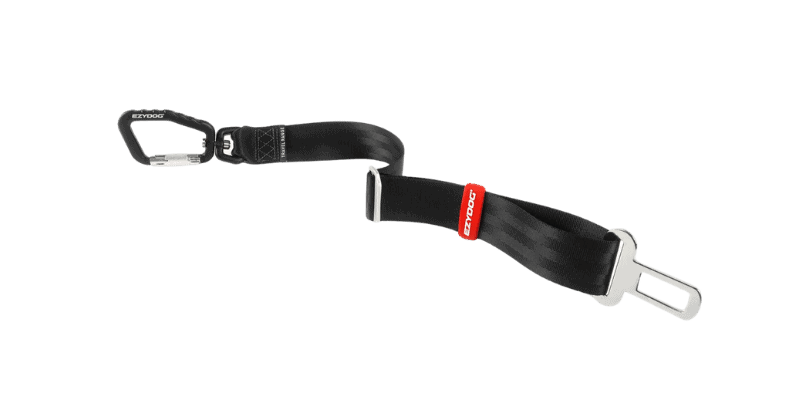
✔ Pros
- Heavy-duty hardware and webbing
- Adjustable length
- Built to last months of daily use
✗ Cons
- More expensive than basic tethers
- Requires a separate harness
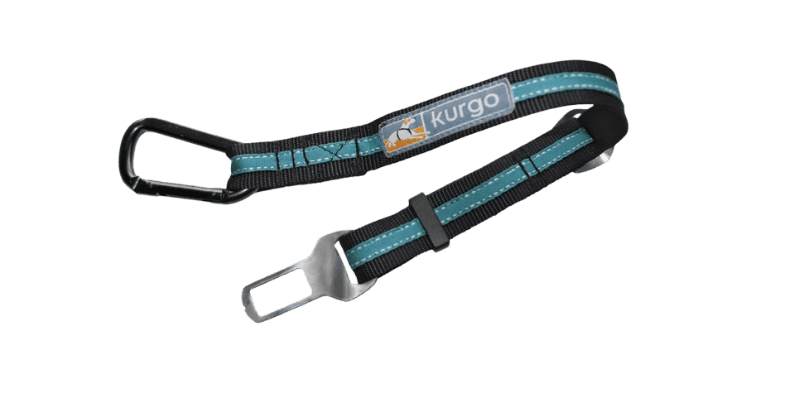
✔ Pros
- Works with any seatbelt (no adapter)
- Swivel clip prevents tangling
- Mid-range price from a quality brand
✗ Cons
- Not adjustable in length
- Lighter duty than the EzyDog
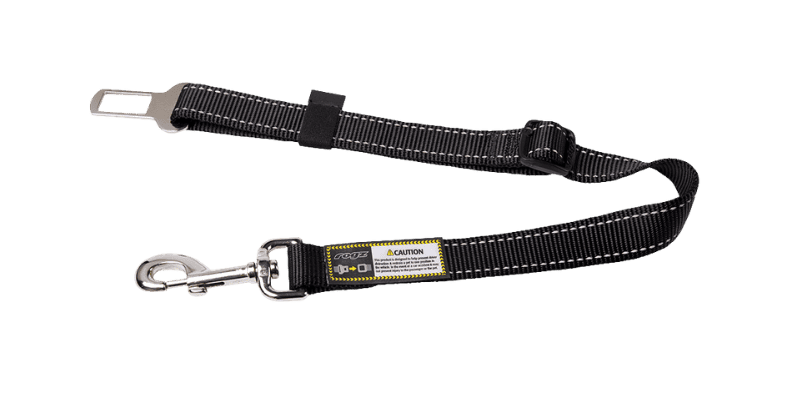
✔ Pros
- Adjustable length
- Decent hardware for the price
- Known brand with good availability
✗ Cons
- Not as heavy-duty as the EzyDog
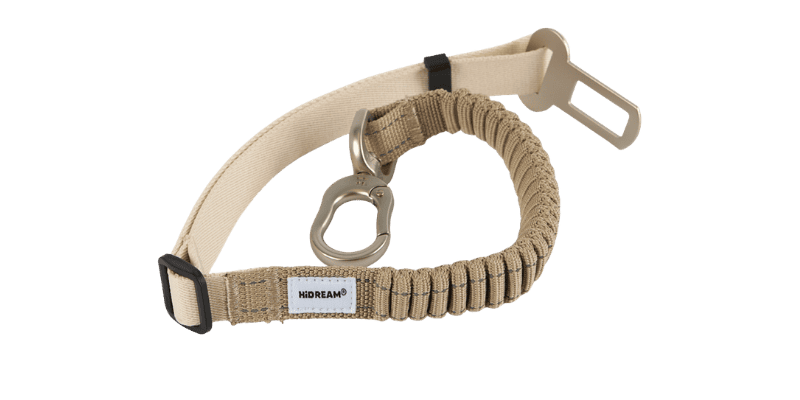
✔ Pros
- Very affordable
- Simple to use
- Good as a spare or backup
✗ Cons
- Lighter hardware
- May not suit large, strong dogs
Car Ramps
If you drive a 4WD, dual cab, or anything with a high tailgate, a ramp isn’t a luxury; it’s a joint saver. Older dogs, large breeds, and dogs with hip or back issues shouldn’t be jumping in and out of high vehicles hundreds of times over the course of a big lap. Even young, fit dogs can develop problems from the repetitive impact over time. A telescopic ramp folds down when you need it and stores in the boot or under the van when you don’t.
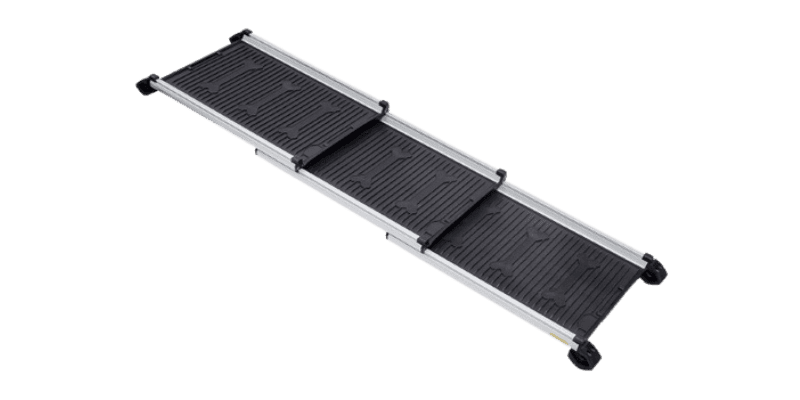
✔ Pros
- Telescopic design for compact storage
- Non-slip surface
- Aluminium build (lightweight, rust-resistant)
- Rated for large dogs
✗ Cons
- Still takes up space when stored
- Some dogs need training to use a ramp confidently
If your dog won’t use a ramp at first, don’t force it. Lay the ramp flat on the ground and lure them across it with treats for a few days. Once they’re confident walking on the surface, gradually raise the angle. Most dogs take to it within a week.
Quick Comparison
Car Seats & Hammocks
| Product | Price | Type | Best For |
|---|---|---|---|
| Doog Car Seat Best Seat | ~$150 | Elevated car seat | Small-medium dogs, long drives |
| Navigator Dog Seat Buddy | ~$100 | Elevated car seat | Mid-range value |
| Paws for Life Dog Car Seat | TBC | Elevated car seat | Budget option |
| Kurgo Rover Backseat Bridge | ~$95 | Footwell bridge/platform | Dogs who lie down on drives |
| Kurgo Heather Hammock Best Hammock | ~$126 | Hammock seat cover | Medium-large dogs, muddy/wet dogs |
| Dune 4WD Dog Hammock Budget | ~$55 | Hammock seat cover | Budget travellers |
Seatbelts & Restraints
| Product | Price | Type | Best For |
|---|---|---|---|
| Carsafe Travel Harness Safest | ~$65 | Full harness (crash-tested) | Maximum safety |
| AFP Travel Car Harness Budget | ~$10 | Basic harness + clip | Trial/backup |
| EzyDog HD Seatbelt Best Tether | ~$55 | Adjustable tether | Large dogs, heavy use |
| Kurgo Seatbelt Tether | ~$32 | Direct seatbelt tether | Universal fit, mid-range |
| Rogz Adjust Clip | ~$23 | Adjustable tether | Everyday use, good value |
| Hi Dream Seat Belt Budget | ~$17 | Basic tether | Backup/spare |
- Small dogs: Get an elevated car seat (Doog or Navigator) plus a seatbelt tether as backup.
- Medium-large dogs: A hammock cover (Kurgo Heather or Dune 4WD) paired with a proper restraint (Carsafe harness or EzyDog tether).
- Large or older dogs: Add a telescopic ramp (Furtastic) to protect their joints over the thousands of in-and-outs ahead.
- The minimum setup: A seatbelt tether and a decent harness. Everything else improves comfort, but restraint is non-negotiable.
Comment (0)