
Choosing the right solar charge controller can make the difference between a reliable power system and endless frustration on the road. With your panels and batteries sorted, the charge controller is the brain that keeps everything working efficiently and safely.
The market is dominated by MPPT controllers these days, with PWM technology largely phased out for serious caravan setups. But within the MPPT category, you’ll find controllers ranging from $150 budget units to $800+ premium models with advanced features. The key is matching the controller’s capabilities to your specific solar array and battery bank.
We’ve tested and researched the top solar charge controllers available in Australia, focusing on reliability, efficiency, and features that actually matter for extended travel. Here are our picks for the best controllers across different budgets and system sizes.
What to Look for in a Solar Charge Controller
Not all charge controllers are created equal. The right choice depends on your solar array size, battery type, and monitoring preferences. Here’s what matters most:
- Controller Type: MPPT delivers 15 to 30% more power than PWM, especially in cooler conditions. Only consider PWM for very small systems under 100W.
- Voltage Rating: Must handle your panel array’s maximum voltage. 100V controllers suit most single series setups; 150V+ needed for larger arrays.
- Current Rating: Should handle your solar array’s maximum current output plus 25% safety margin.
- Battery Compatibility: Must support your battery chemistry (AGM, Gel, Lithium). Lithium requires programmable charging profiles.
- Temperature Compensation: Essential for lead acid batteries. Built in sensor or external probe option.
- Monitoring Features: Bluetooth/WiFi connectivity and smartphone apps make system monitoring much easier.
- Build Quality: Look for IP ratings of 21+ for dust/moisture protection. Fanless designs are more reliable long term.
- Warranty: Minimum 2 years, with 5+ years preferred for premium units.
Size your controller based on your future solar expansion plans, not just current panels. It’s much cheaper to buy the right size upfront than replace later.
Best Solar Charge Controllers Reviewed
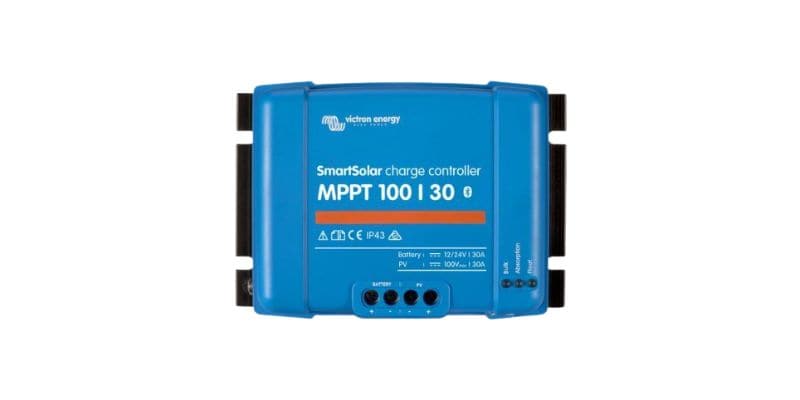
✔ Pros
- Excellent VictronConnect app with detailed monitoring
- Programmable charging profiles for all battery types
- Ultra fast MPPT tracking (10ms)
- 5 year warranty
- Temperature compensation sensor included
- Fanless design for silent operation
✗ Cons
- No built in display (app only monitoring)
- Bluetooth range limited to about 10 metres
- Premium pricing compared to basic controllers
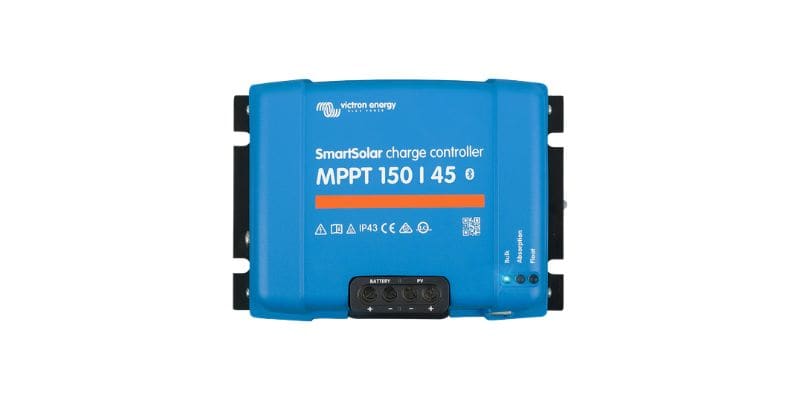
✔ Pros
- Handles large solar arrays up to 650W (12V systems)
- 150V input allows series panel configurations
- Same excellent VictronConnect app features
- Advanced MPPT algorithm with load output
- Temperature compensation and programmable profiles
- 5 year warranty
✗ Cons
- Significant price premium over smaller models
- Overkill for typical 400W caravan setups
- Larger mounting footprint
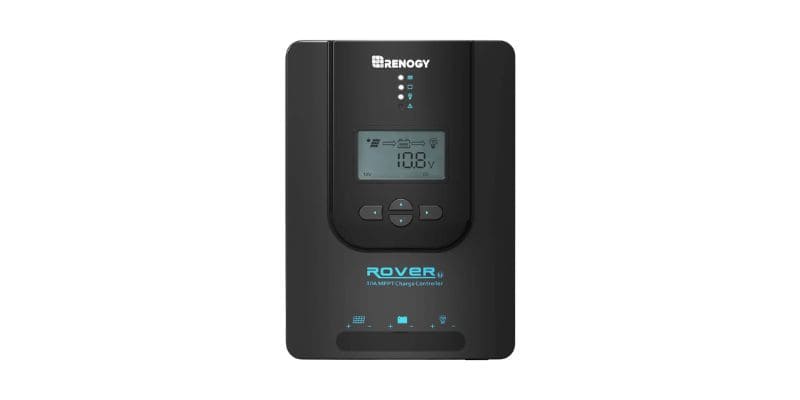
✔ Pros
- Dedicated lithium battery support
- Excellent DC Home smartphone app
- Large, bright LCD display
- Customisable charging profiles
- Temperature compensation sensor included
- Dual USB outputs for device charging
- 3 year warranty
✗ Cons
- Fan cooling can be noisy
- Bluetooth connectivity requires separate module
- Slightly lower efficiency than Victron
✔ Pros
- 40A rating handles larger panel arrays
- Well supported Australian brand
- Good value for the current capacity
- Supports AGM, Gel, and Lithium batteries
✗ Cons
- Less monitoring capability than Victron
- Fewer advanced programming options
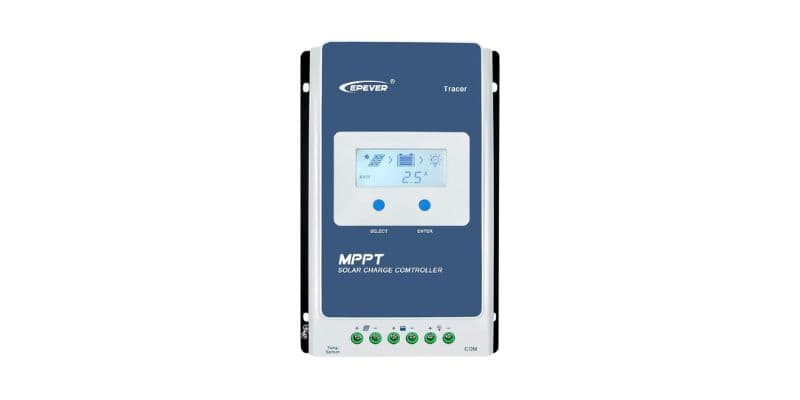
✔ Pros
- Very compact size saves installation space
- Excellent efficiency ratings
- Clear LCD display with backlight
- WiFi monitoring module available
- Programmable charging parameters
- Good build quality for the price
✗ Cons
- Limited to 20A charging current
- WiFi module costs extra
- Basic smartphone app compared to Victron
- Only 2 year warranty
✔ Pros
- High 60A current capacity
- Supports lithium and SLA batteries
- Strong value for the current rating
- Suits large 12V and 24V systems
✗ Cons
- Limited monitoring and app features
- Less brand recognition than Victron or Renogy
✔ Pros
- Very high 100A charge current
- Supports multiple system voltages
- Low price for the current capacity
✗ Cons
- Lesser known brand with limited local support
- Fewer monitoring features
- Warranty and after sales support uncertain
Comment (0)