
A rooftop reverse cycle air conditioner is the difference between sleeping through a 40°C night and lying awake in a puddle. This guide covers how they work, how to size one to your van, what actually matters when you buy, and our top picks for 2026, from the do-everything Dometic FreshJet Pro to the honest value of a Houghton Belaire.
What Is a Rooftop Reverse Cycle Air Conditioner?
A rooftop air conditioner is the box you see sitting on the roof of most Australian caravans. It works exactly like the split system in your house, just packaged into a single self-contained unit that drops into a standard roof hatch aperture. It pulls warm air from inside the van, passes it over a cold coil, and blows chilled, dehumidified air back in through a central roof outlet or through ducting.
The “reverse cycle” part means it runs the process backwards to heat as well as cool. That matters more than it sounds. Reverse cycle heating is far more power-efficient than a plug-in fan heater, and it takes the edge off a cold desert morning without you touching the diesel heater. Almost every quality rooftop unit sold in Australia is now reverse cycle, so cooling-only models are rare and only worth considering for pure tropical use where you will never see a cold night.
Rooftop is the default for a reason. It keeps the weight and noise up and out of your living space, it does not eat a cupboard, and it cools the whole van evenly. The trade-off is 30 to 44kg mounted high on the roof, which raises your centre of gravity and eats into payload. For most vans that is a fair deal. If it is not, an under bunk unit puts that weight down low, and we cover those separately.
What to Look For (and How to Size One)
Rooftop units look similar from the ground, but the gap between a fixed speed budget box and a modern inverter is real, especially if you free camp. Here is what actually matters.
- Cooling capacity vs van length: around 2.4kW suits vans up to 5.5m, 2.8 to 3.4kW covers 5.5 to 7m, and 3.5 to 4.0kW is for 7 to 8m or hot, poorly insulated vans. Undersize it and it never catches up in 40°C heat. Oversize it and you waste roof weight and power.
- Reverse cycle: buy reverse cycle unless you genuinely never leave the tropics. The heating mode is efficient, quiet and saves you firing up another appliance on a cool night.
- Inverter vs fixed speed: an inverter unit ramps its compressor up and down to hold temperature, so it runs quieter, uses less power and does not jolt you awake cycling on and off. A fixed speed unit is cheaper but runs flat out or not at all. For full-timers the inverter premium is usually worth it.
- Power draw and off grid capability: this is the big one. Fixed speed units hit you with a large startup surge and pull 5 to 7A running at 240V, so they realistically need mains, a big inverter or a generator. Inverter units soft start and can drop as low as 2.2A before ramping up, which makes them the only rooftops sensible on battery and solar.
- Weight: lighter Lite models around 34kg matter for smaller vans and tow stability. A heavy 44kg unit high on the roof is felt in the van’s handling.
- Ducted vs non ducted: non ducted means a single central roof outlet, which is cheaper and by far the most common. Ducted spreads the air through roof channels to multiple outlets, giving more even cooling in a long van and a quieter bedroom.
- Noise: you sleep directly under this thing. Inverter units running at part load are the quietest. A fixed speed unit at full noise every cycle is the one you notice at 2am.
Quick sizing rule: up to 5.5m go for a FreshJet Lite or Truma Aventa; 5.5 to 7m go for a FreshJet Pro, Ibis MK4 or Gree 3.5kW; 7 to 8m or a hot, sun-exposed van go for a FreshJet Plus or Houghton HB3600V. When in doubt, size up one step for the Top End.
Our Top Picks for 2026
We have sorted through the rooftop units worth buying in Australia, from the premium inverters to the honest budget box. Here are our picks.
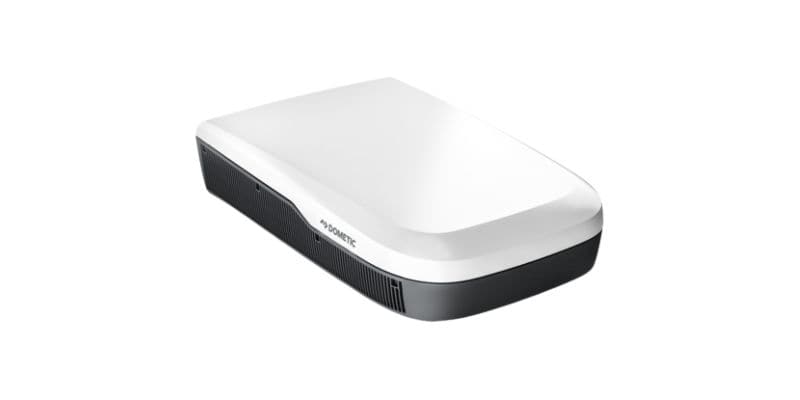
✔ Pros
- Inverter soft start, quiet and efficient at part load
- 3.4kW suits the most common van sizes
- Strong national parts and service
- Off grid capable with the right battery setup
✗ Cons
- Premium price
- Full off grid benefit still needs a decent inverter and battery
- New series, so long-term record still building
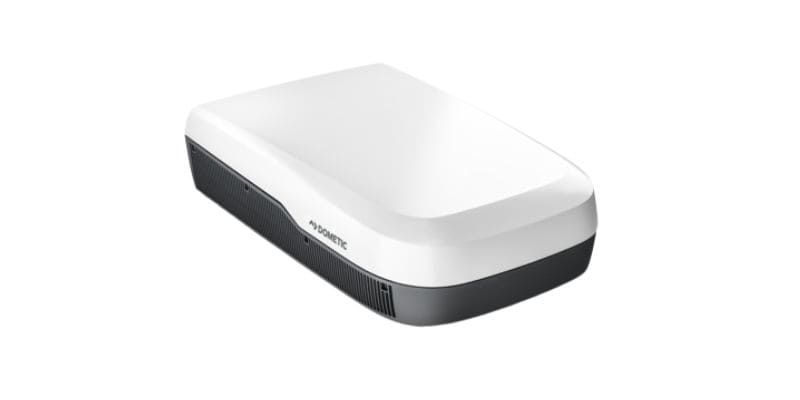
✔ Pros
- Industry-leading 4.0kW rooftop cooling
- Inverter soft start and part-load efficiency
- Made for large, hot or poorly insulated vans
- Same service network as the Pro
✗ Cons
- Heaviest FreshJet at 43.6kg
- Overkill and wasted weight on a small van
- Premium price
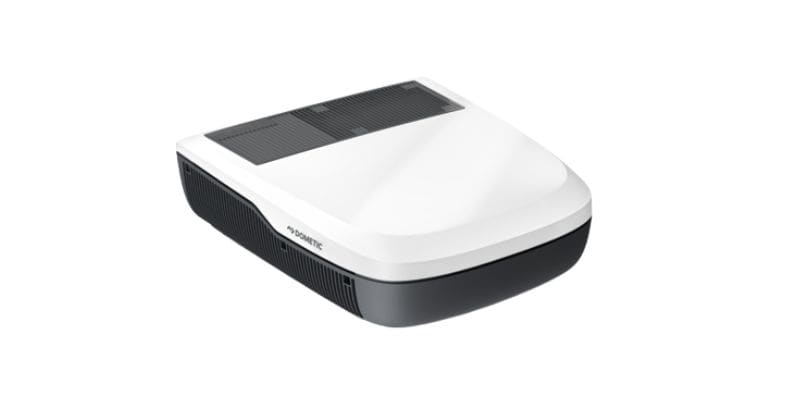
✔ Pros
- Lightest FreshJet at 34.4kg
- Cheapest FreshJet, still a full inverter
- Ideal for small vans and camper trailers
- Kinder to payload and tow stability
✗ Cons
- Lower heating output
- Not enough for big or hot vans
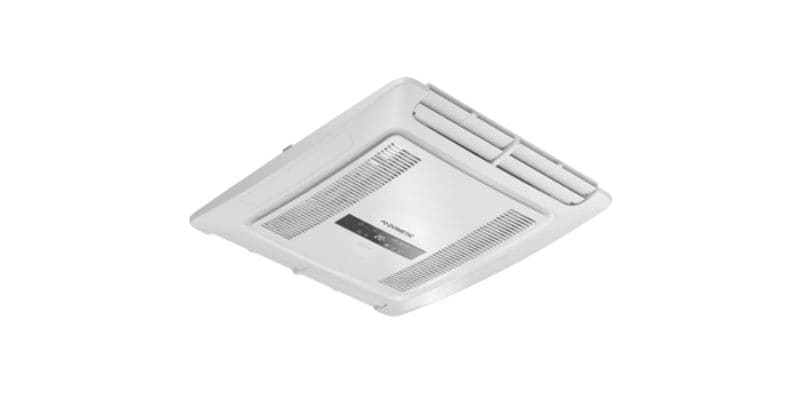
✔ Pros
- Low 2.2A soft start, genuinely off grid friendly
- Dual cylinder inverter
- Australian design heritage, now Dometic backed
- Strong heating output for its size
✗ Cons
- Lower cooling than the FreshJet Pro or Plus
- Aircommand to Dometic renaming is confusing in listings
- Priciest unit here
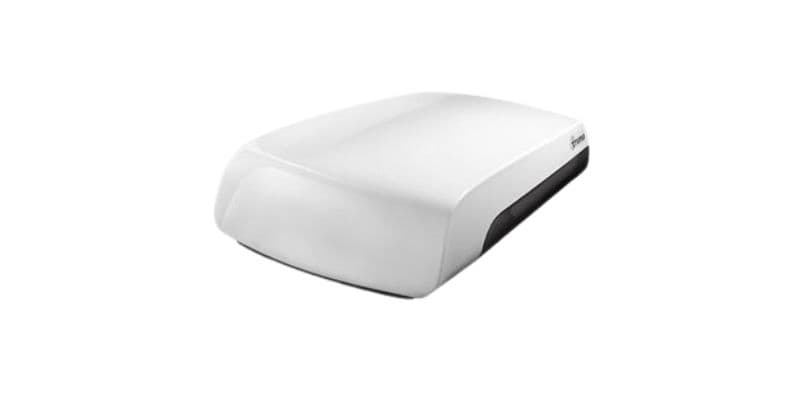
✔ Pros
- Excellent German build quality
- Quiet running and light at ~33kg
- Optional ducting and strong AU support
- Well suited to off-road and European vans
✗ Cons
- Lower raw cooling than a FreshJet for similar money
- Caps out at smaller to mid vans up to ~6m
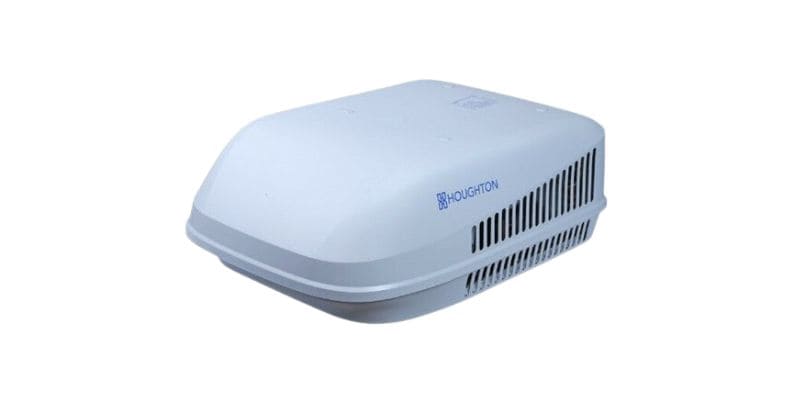
✔ Pros
- Strong 3.4kW cooling for the price
- Cheap, widely stocked parts
- Suits mid to large vans on powered sites
- Inverter HB3600V available for off grid value
✗ Cons
- Fixed speed: high surge, ~6.3A running
- On and off cycling noise overnight
- Poor off grid candidate (choose the HB3600V)
- Value-tier build
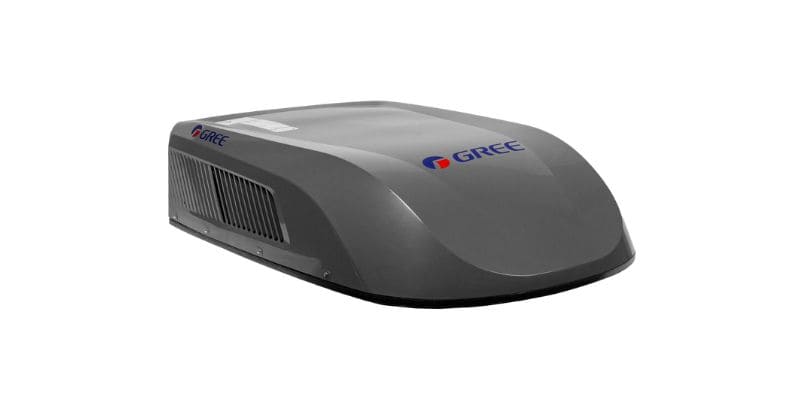
✔ Pros
- Full inverter with strong 3.6kW cooling
- Ultra low profile and light on the roof
- LED halo lighting and WiFi options
✗ Cons
- Thinner AU caravan aftermarket and service
- Less of a household name in vans
Quick Comparison Table
Here is how the picks stack up side by side.
| Unit | Price | Cooling | Weight | Compressor | Best For |
|---|---|---|---|---|---|
| Dometic FreshJet 7 Series Pro Pick | ~$2,250 | 3.4kW | 41kg | Inverter | Most 5.5 to 7m vans |
| Dometic FreshJet 7 Series Plus | ~$2,290 | 4.0kW | 43.6kg | Inverter | Big or hot vans 7 to 8m+ |
| Dometic FreshJet 7 Series Lite | ~$2,090 | 3.0kW | 34.4kg | Inverter | Small vans, weight conscious |
| Dometic Ibis MK4 | ~$2,389 | 2.88kW | 40kg | Inverter | Off grid friendly |
| Truma Aventa Comfort | ~$2,049+ | 2.4kW | ~33kg | Inverter | Premium build, off-road vans |
| Houghton Belaire HB3400 Value | ~$1,400 to $1,650 | 3.4kW | 38kg | Fixed speed | Value on powered sites |
| Gree Slimline 3.5kW | ~$2,299 | 3.6kW | Low profile | Inverter | Value inverter, near support |
Running One Off Grid
This is where rooftop units separate. A fixed speed unit like the standard HB3400 hits you with a big startup surge and pulls 5 to 7A running at 240V, which realistically means mains power, a large inverter or a generator. An inverter unit soft starts and modulates, so a good one can idle down to 2.2A before ramping up. That is the difference between a rooftop you can run on battery and one you cannot.
Even with an inverter unit, running air con off grid is a serious power ask. You want 300Ah or more of lithium, a 2000 to 3000W pure sine inverter to handle the startup surge, and enough solar to put that energy back during the day. It is absolutely doable, plenty of full-timers cool their van on battery through a desert afternoon, but it is a whole-system decision, not something the rooftop does on its own. We have a dedicated guide to building the power system to do it.
A rooftop unit puts 34 to 44kg high on your roof. Check it against your van’s payload and roof rating before you buy, and remember 240V wiring is licensed work. Get the electrical side signed off by a qualified installer.
Frequently Asked Questions
What size air conditioner do I need for my van?
Match cooling to length. Up to 5.5m is around 2.4kW, 5.5 to 7m wants 2.8 to 3.4kW, and 7 to 8m or a hot, poorly insulated van needs 3.5 to 4.0kW. If you are chasing the Top End, size up a step.
Can I run a rooftop air conditioner off my batteries?
Only sensibly with an inverter unit, and even then you need a big system: 300Ah or more of lithium, a 2000 to 3000W inverter and plenty of solar. Fixed speed units really need mains or a generator.
Is reverse cycle worth it, or should I get cooling only?
Reverse cycle, almost always. The heating mode is efficient and quiet, and it saves you firing up another appliance on a cold desert night. Cooling only is a niche choice for pure tropical use.
Ducted or non ducted?
Non ducted with a single central outlet is cheaper and fine for most vans. Ducted spreads the air to multiple outlets for more even cooling and a quieter bedroom, and it is worth it in a long van.
- Size cooling to van length first, and buy reverse cycle unless you never leave the tropics.
- The Dometic FreshJet 7 Series Pro is the best all-round buy for most vans; the Plus is for big or hot vans and the Lite for small, weight-conscious ones.
- If you free camp, an inverter unit like the Ibis MK4 or the Houghton HB3600V is the only sensible rooftop, and it still needs a big battery and solar system.
- The Houghton HB3400 is the value pick for powered sites; the Truma Aventa Comfort is the premium build choice.
- Check payload and roof rating before you buy, and leave the 240V wiring to a licensed installer.
Comment (0)