
Portable solar is what keeps the fridge cold and the batteries topped up when you’re parked off-grid for days at a time. For most Big Lappers it’s the difference between going where you want for as long as you want, and constantly chasing powered sites or listening to a generator drone all afternoon.
This guide covers the portable solar worth buying in 2026, from rigid folding panels to lightweight blankets, and which type suits which kind of traveller. We’ve focused on gear that holds up in real Australian conditions and actually delivers close to its rated output, not just impressive numbers on a spec sheet.
What to Look for in a Portable Solar Panel
Choosing the right portable solar panel is the difference between reliable power and constant battery anxiety. Get it wrong and you’ll be running a generator daily or rationing your fridge. Here’s what actually matters.
- Wattage Output: Aim for 160 to 300W for caravan use. More watts means faster charging, but a bigger, heavier panel to store and set up.
- Folding Panel or Blanket: Rigid folding panels are more efficient and last longer. Blankets are lighter and pack smaller, but lose a little efficiency and don’t tend to last as long.
- Cell Efficiency: Monocrystalline cells (every panel here uses them) perform better in partial shade and low light than older polycrystalline.
- Build Quality: Look for ETFE coating, reinforced corners and sturdy stands that won’t fold up in a gust.
- Included Controller: Some panels include a charge controller, some don’t. An MPPT controller pulls 20 to 30 percent more power than a basic PWM.
- Connector Compatibility: Anderson-style plugs are the Australian standard. Some imported panels (like the Renogy) use MC4 and need a cheap adapter.
- Warranty: Two years is the minimum you should accept. Premium panels offer more.
- Weather Rating: IP65 or better, so it shrugs off rain, dust and UV across the lap.
Check your panel’s real output with a multimeter on the first few trips. Rated wattage is measured under perfect lab conditions, so real-world output is typically 70 to 80 percent of the number on the box.
Best Portable Solar Panels Reviewed
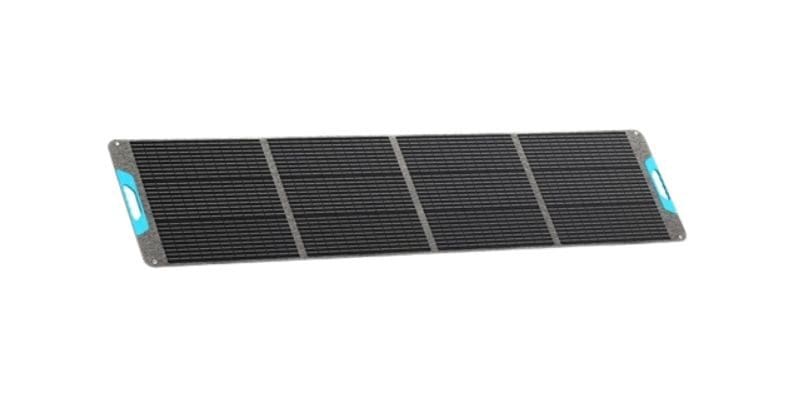
✔ Pros
- High 23.5% efficiency for a portable panel
- Strong low-light and partial-shade performance
- Trusted brand with easy support and spares
- Sensible weight and tough ETFE build
✗ Cons
- No charge controller included
- MC4 connectors need an Anderson adapter
- Dearer than the value picks
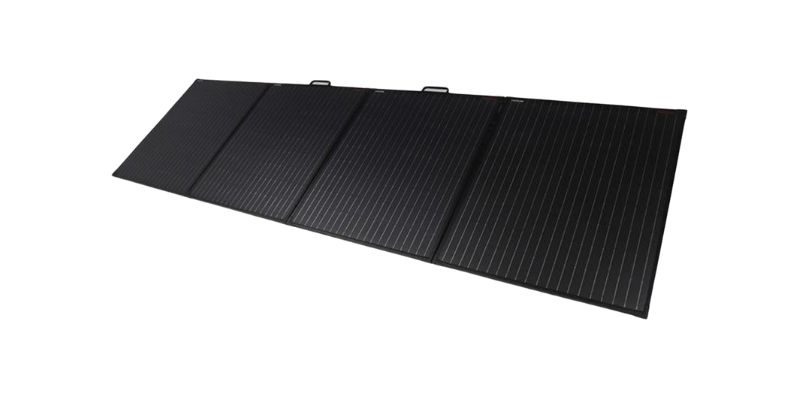
✔ Pros
- Highest wattage here at the lowest price
- Includes a controller, ready to go out of the box
- Slim, light and genuinely tough
- Anderson-style plugs, no adapters needed
✗ Cons
- Included controller is PWM, not MPPT
- Slightly lower cell efficiency than the Renogy
- Shorter 18-month warranty
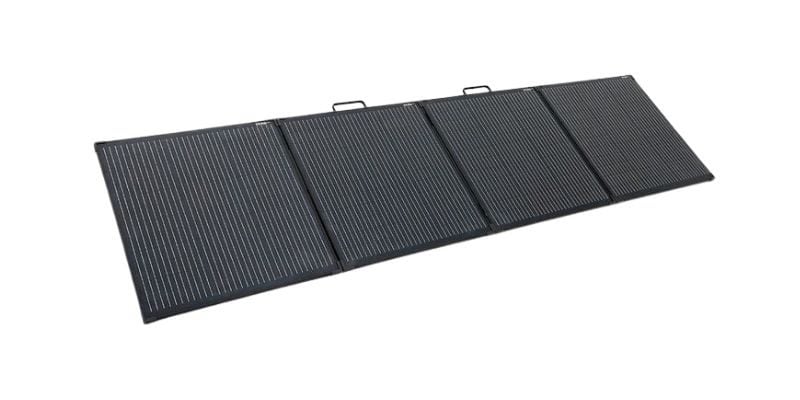
✔ Pros
- 250W in a notably slim, light package
- Self-cleaning ETFE surface
- Quick-connect plugs for easy setup
- Excellent value on Anaconda Club pricing
✗ Cons
- No controller included
- Best paired with Dune’s own MPPT units
- House brand, less of a track record than Renogy
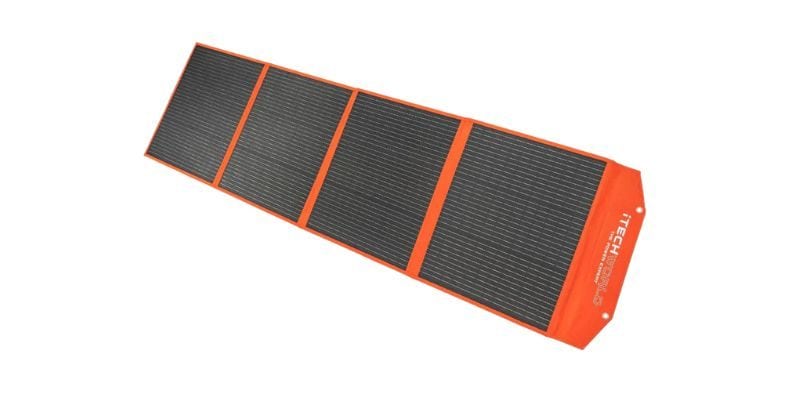
✔ Pros
- Complete kit with controller, leads and stand
- Tough self-cleaning Raptor Skin coating
- Built-in stand for proper sun angling
- Australian-designed with quality cabling
✗ Cons
- Pricier than the folding panels
- Blankets lose efficiency faster over time
- 200W from a heavier-than-rivals blanket
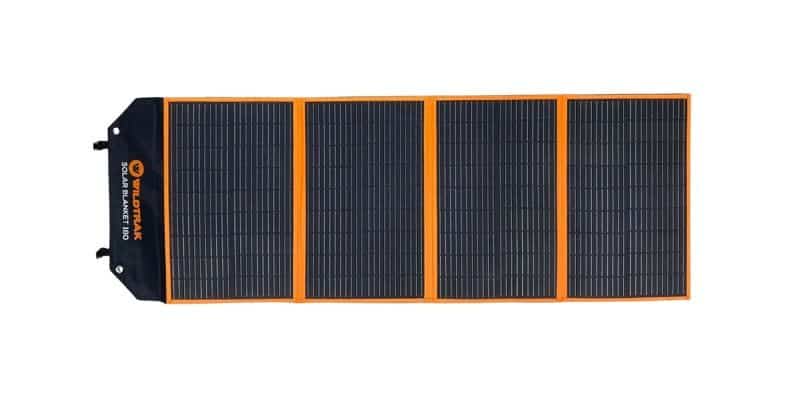
✔ Pros
- Includes a quality MPPT controller
- Light and quick to set up and pack down
- Built-in stand for angling at the sun
- Anderson-style plug-and-play lead included
✗ Cons
- Lowest wattage in this guide
- Blanket cells age faster than rigid panels
- Better as a top-up than a sole power source
Never connect a portable solar panel straight to your batteries without a charge controller. Unregulated charging can damage lithium batteries and create a fire risk. The Wildtrak, iTechworld and KickAss kits here include a controller; the Renogy and Dune need a suitable MPPT or PWM controller added.
Quick Comparison Table
| Panel | Power | Type | Controller | Price |
|---|---|---|---|---|
| Renogy 200W Folding Best Overall | 200W | Folding panel | No | ~$399 |
| KickAss 300W Super Thin Best Value | 300W | Super-thin folding | PWM | ~$349 |
| Dune 4WD 250W Slim | 250W | Slim folding | No | ~$469 |
| iTechworld 200W Blanket | 200W | Blanket | Yes | ~$549 |
| Wildtrak 160W Blanket | 160W | Blanket | MPPT | ~$499 |
Work out your daily power use before fixing on a wattage. A 200W panel makes roughly 800 to 1000Wh on a good day, plenty for lights, device charging and a 12V fridge, but tight once you add an inverter for bigger loads.
Final Thoughts
The right portable solar panel turns battery anxiety into proper energy independence. For most Big Lappers the Renogy 200W is the best all-rounder thanks to its efficiency and build quality, while the KickAss 300W is the value champion: more watts and an included controller for less money than anything else here. If you want a blanket rather than a rigid panel, the iTechworld 200W is the rugged, all-in-one pick.
Whichever you choose, remember a panel is only one part of your power system. Pair it with the right charge controller, decent batteries and realistic expectations about daily generation. Even the best panel can’t fix poor system design or wildly optimistic power demands.
- The Renogy 200W is the best all-rounder for efficiency and long-term reliability
- The KickAss 300W is the value pick: most watts per dollar, with a controller included
- Folding panels are more efficient and durable; blankets are lighter and pack smaller
- Check whether a controller is included, and prefer MPPT over PWM where you can
- Match your panel to your real daily power use, not the biggest number on the box
Comment (0)