
A portable air conditioner sounds like the easy answer to a hot van, and sometimes it is. But the honest truth is that a portable cools a corner, not your whole caravan, and half the “portable air conditioners” sold to campers are not air conditioners at all. This guide sorts the real compressor units from the evaporative coolers, and tells you which one actually earns a spot in your setup.
Portables: What They Actually Are (And Aren’t)
Before you spend a cent, understand that “portable cooling” for a caravan splits into two completely different things, and the gap between them is enormous.
A true portable air conditioner has a compressor, exactly like your rooftop unit or the split system at home. It removes heat and drops the temperature no matter how humid it is. The catch is that it has to dump that heat somewhere, so it needs a vented exhaust hose running outside, and almost every one runs on 240V. That means a powered site, a generator, or a big inverter and battery bank. It is real cooling, but it is not free of strings.
An evaporative cooler is a different animal. It blows air over a wet pad, and the water evaporating pulls a few degrees out of the air. It sips power, needs no exhaust, and costs a fraction of the price. It is not an air conditioner. In dry inland heat it works a treat. In the humid Top End, Kimberley or coastal Queensland summer it does almost nothing, and it adds moisture to air that is already soggy.
A portable is a supplement, not a replacement for a rooftop unit. True portables need 240V and a vented exhaust, or they are small battery units that cool a personal zone only. And an evaporative cooler is NOT an air conditioner: it works in dry heat and is useless in the tropics. If you full time through hot country, a rooftop reverse cycle unit is still the answer.
Will a Portable Actually Cool Your Van?
Set your expectations honestly and you will be happy. Expect too much and you will be cranky and out of pocket.
A portable compressor unit like the KickAss puts out around 3,100 BTU. Your rooftop reverse cycle unit puts out 10,000 to 14,000 BTU. So a portable will not cool an eight metre van in 40°C. What it will do well is knock the edge off a single space: the bed you sleep in, a swag, an annexe, or a pop top corner. Point it at one zone, close that zone off as much as you can, and it earns its keep.
Where a portable genuinely shines:
- Spot cooling the bed: get a night’s sleep on a stinking evening without running a generator all night for the rooftop.
- Annexe, tent or swag: cool a space that has no rooftop unit at all.
- Vans with no rooftop fitted: a stopgap for camper trailers, off road vans and older setups.
- Dry inland touring (evaporative): the Red Centre, the Nullarbor and western NSW where the air is bone dry.
A true portable makes water and blows hot air out the exhaust. Route the exhaust hose out a window or hatch with a proper seal, and plan for the condensate: either empty the tank or run the continuous drain hose outside.
What to Look For When Buying
The specs that matter for a portable are not the same ones you weigh up for a rooftop. Here is what counts.
- Compressor or evaporative? This is the first fork in the road. A compressor unit is a real air conditioner that works anywhere. An evaporative cooler only works in dry heat. Decide which climate you travel in before anything else.
- Power source: 240V units need mains, a generator, or an inverter big enough for the startup surge (roughly 1,400 to 1,500W for the KickAss). Battery DC units run off 12V or 24V and are the only genuine off grid choice.
- Cooling output (BTU): 2,300 to 3,100 BTU is personal zone territory. Do not expect it to cool a whole van. Match the unit to a single closed off space.
- Exhaust and drainage: a compressor unit must vent its hot exhaust outside, with clearance from the intake, or it just fights itself. Check the hose length and how you will seal it into a window or hatch.
- Running draw: the KickAss sips around 420W once running, which a decent inverter handles. A 12V compressor unit like the Cold King can pull 40A or more, which is a serious load on your battery bank.
- Weight and size: you have to store it. 13kg and a boxy footprint eats van space, so be honest about where it lives when you are towing.
- Noise: you often sleep next to it. Around 50dB is livable; cheaper units can be a lot louder.
Our Top Picks
Four options, and they are genuinely different tools for different jobs. Read the “best for” line on each before you buy, because the wrong one for your climate is money wasted.
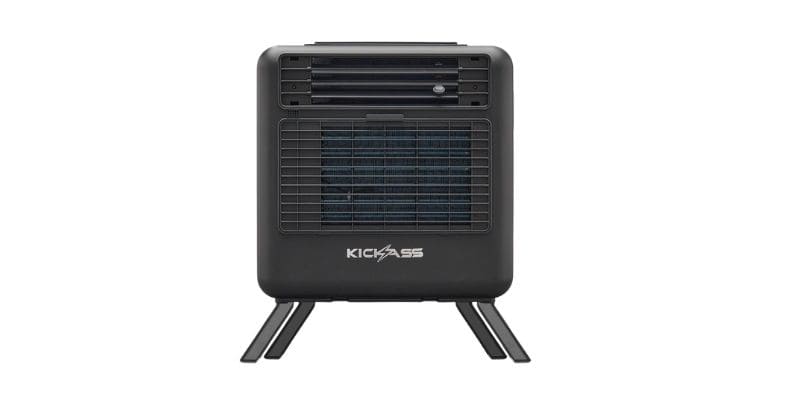
✔ Pros
- Real compressor cooling, works in humidity
- Low running draw for a 240V unit
- Continuous drain option, so no tank emptying
- Quiet and reasonably priced
✗ Cons
- 240V only: needs mains or a capable inverter
- Startup surge of roughly 1,400 to 1,500W
- Must vent the exhaust outside
- Cools a small zone, not the whole van
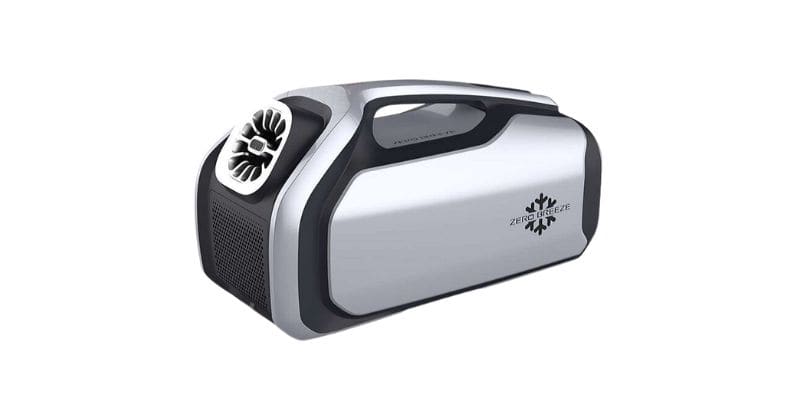
✔ Pros
- Genuine compressor cooling on battery power
- Runs cordless with the dedicated battery
- Low running draw for real air conditioning
- Truly portable and self contained
✗ Cons
- Expensive for the cooling output
- 2,300 BTU suits a tent, not a van
- Limited battery runtime
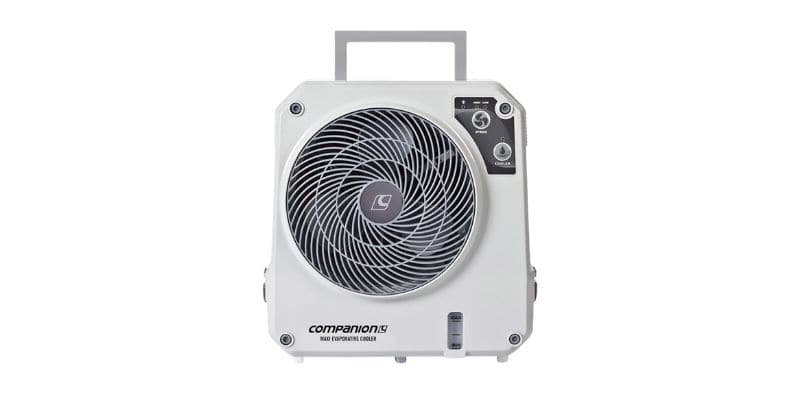
✔ Pros
- Cheap and genuinely useful in dry heat
- Tiny power draw, runs off its own battery
- No exhaust, no wiring, grab and go
- Light and easy to store
✗ Cons
- Not an air conditioner, only a few degrees
- Useless and counterproductive in humidity
- Small tank needs frequent refills
- Cools a personal zone only
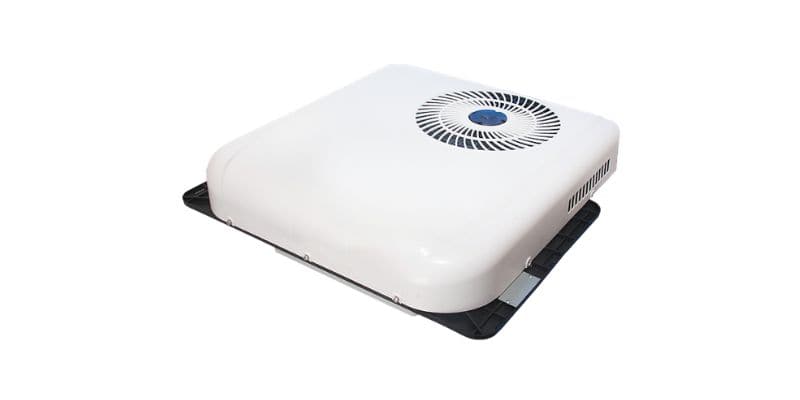
✔ Pros
- Genuine compressor cooling on 12V, no 240V needed
- Suits a purpose built off grid rig
- Proven in the truck sleeper cab market
✗ Cons
- Heavy current draw needs a big lithium bank
- More of an install than a portable
- Niche support in the caravan world
Quick Comparison Table
Here is how the four options stack up side by side.
| Unit | Price | Type | Power | Cooling | Best For |
|---|---|---|---|---|---|
| KickAss 400W Pick | ~$499 | Compressor | 240V | 3,100 BTU | Bed or annexe spot cooling |
| Zero Breeze Mark 2 | ~$1,500 to $1,800 | Compressor | 24V battery | 2,300 BTU | Off grid tent or swag |
| Companion Maxi Budget | ~$100 to $150 | Evaporative | Own battery | A few degrees | Dry inland heat only |
| Cold King 12V | ~$1,500 to $2,500+ | Compressor | 12V / 24V | Cab sized | Off grid builds, big battery |
The Verdict
For most big lappers, the KickAss 400W Portable Air Conditioner is the one to buy. It is real cooling that works in any climate, it runs off an inverter, and it costs a fraction of a rooftop unit while doing a job a rooftop cannot: cooling a swag or annexe. Just treat it as spot cooling and vent the exhaust properly.
If you free camp with no mains or generator, the Zero Breeze Mark 2 is the only genuine off grid answer, provided you accept it cools a tent sized zone. If you travel dry inland Australia and want cheap relief, the Companion Maxi is brilliant value, as long as you never expect it to work in the tropics. And the Cold King 12V stays niche: a real option only for the off grid builder with the battery bank to feed it.
The one thing no portable does is replace a rooftop reverse cycle unit for cooling a whole van through a Queensland summer. If that is your reality, put your money there and use a portable as the supplement it was always meant to be.
- A portable is a supplement for spot cooling a bed, swag or annexe, not a replacement for a rooftop unit.
- The KickAss 400W is the best all round pick: real compressor cooling that runs off mains or a capable inverter.
- The Zero Breeze Mark 2 is the only genuine off grid unit, but it only cools a tent sized space.
- Evaporative coolers like the Companion Maxi are not air conditioners: great in dry heat, useless in humidity.
- True portables need 240V and a vented exhaust, or a serious battery bank for the DC units.
Comment (0)