
An electric heater is the cheapest, simplest way to warm a caravan, with zero combustion and zero carbon monoxide. The catch is honest: they realistically only work on a powered site, because a 2,000W heater flattens a battery bank in an hour. This guide covers what to look for and our top picks for 2026.
The Honest Truth About Electric Heaters in a Van
An electric heater is the cheapest heating you can buy, and it has two genuine advantages over gas and diesel: there is no combustion, so there is no carbon monoxide and no moisture pumped into your living space. You can run one over your bed all night without a second thought about ventilation. For a lot of travellers that peace of mind is the whole appeal.
The problem is power. Electric heaters draw 1,000 to 2,400 watts, and there is no getting around the physics. A 2,000W heater pulls roughly 170 amps out of a 12V system once you account for inverter losses. That will flatten even a big lithium bank in about an hour, and no realistic solar setup keeps up with it. These are shore-power appliances, full stop. Plugged into a powered site they are brilliant. Out bush without a generator running, they are useless.
Do not try to run a 2,000W heater off your batteries and inverter to save on a powered site. You will drain the bank in under an hour and stress the inverter doing it. If you are heating off grid, that is a job for a diesel or gas heater, not electric.
So the honest positioning is this: buy an electric heater as your powered-site heater, or as a backup to a diesel unit for the nights you happen to be plugged in. It is not an off-grid solution, and any guide that tells you otherwise is selling you something.
What to Look For When Buying
Electric heaters are simple, but a few things separate a good one from a fire hazard that lives at the bottom of a boot. Here is what matters.
- Wattage equals heat: there is no clever trick here, more watts means more heat. 1,000W is plenty for a small to mid van on a powered site. Step up to 2,000 to 2,400W only if you want to heat a large van fast or you are in serious cold. Higher wattage also means a heavier draw on the site supply.
- Thermostat and timer: a thermostat lets the heater cycle to hold a set temperature instead of running flat out and cooking you at 3am. A timer means you can set it to fire up before you wake. Both are worth having.
- Tip-over and overheat cut-outs: non-negotiable in a small space. A tip-over switch kills the heater the moment it falls, and an overheat cut-out shuts it down if the element gets too hot. Any heater going in a van needs both.
- Type trade-offs: the three styles each suit a different traveller, and it is worth understanding the difference before you buy.
Ceramic vs Oil Column vs Panel
These are the three types you will actually be choosing between, and they behave very differently in a van.
- Ceramic fan heater: heats fast because it blows warm air around the cabin, and it is dirt cheap. The downside is fan noise, which you will notice at night, and the cheapest ones do not last. Best for quick warm-ups and drying out a damp van.
- Oil column heater: silent, with a gentle radiant warmth that holds even after it switches off. The catch is size and weight. A column heater is heavy and bulky, and finding somewhere to store one in a van is a genuine payload and space headache. Best for long powered-site stays where it can live in one spot.
- Panel heater: slim and flat, so it stows against a wall or mounts on one, which solves the storage problem the column heater creates. Output is moderate rather than blistering, but for a van on a powered site that is usually all you need.
In a van, storage is worth as much as heat output. A slim panel heater that hangs on a wall beats a column heater that eats a whole cupboard, even if the column pushes out a few more watts.
Our Top Picks for 2026
Three heaters cover the ground for powered-site travellers, from the purpose-built pick to the cheap-and-fast and the silent-but-bulky. Here they are.
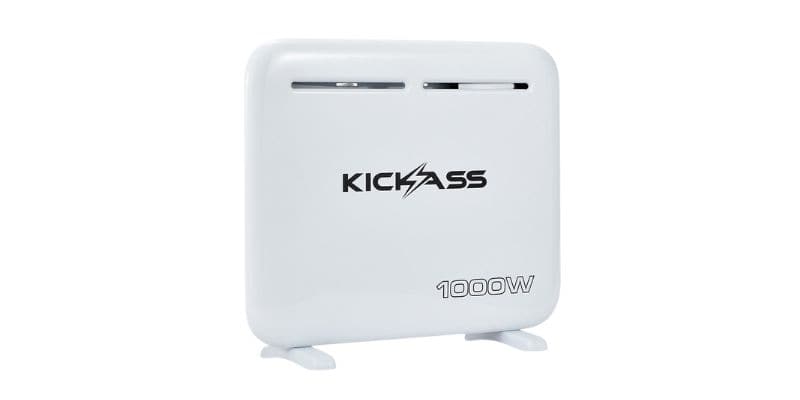
✔ Pros
- Slim and wall-mountable, stows flat
- Designed for camping, not a home hand-me-down
- Whisper quiet with thermostat and 24hr timer
- Overheat and anti-tip protection
- 500W version for tighter spaces
✗ Cons
- 1,000W is powered-site territory only
- Won’t heat a huge van fast in alpine cold
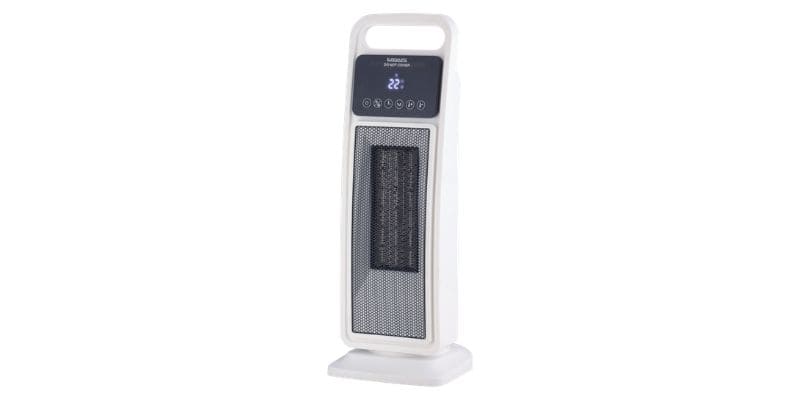
✔ Pros
- Cheapest heater going
- Warms the cabin fastest
- Moving air helps dry out a damp van
- Compact and light to store
✗ Cons
- Fan noise all night
- The very cheap ones are short-lived
- 2,000W is a heavy mains draw
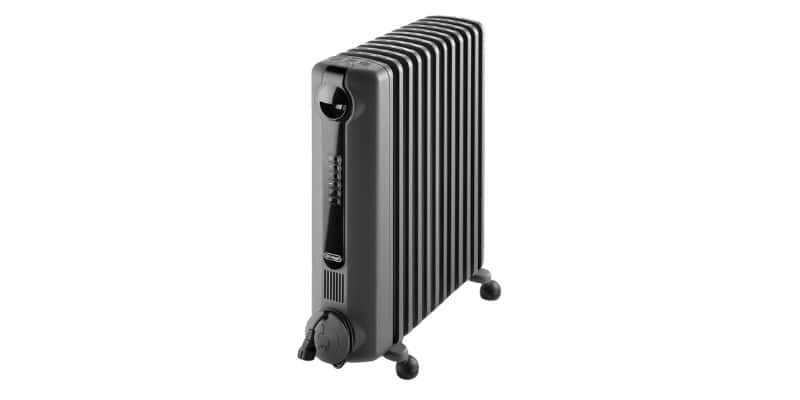
✔ Pros
- Completely silent
- Gentle radiant heat holds after switch-off
- Thermostat and timer common
- No hot exposed element to touch
✗ Cons
- Heavy and bulky, a real storage and payload problem
- Slow to warm the cabin
- Powered-site only
Quick Comparison Table
Here is how the three types stack up side by side.
| Heater | Price | Output | Noise | Best For |
|---|---|---|---|---|
| KickAss Panel Heater 1000W Pick | $99.95 | 1,000W | Whisper quiet | Powered-site vans, easy storage |
| Ceramic Fan Heater | ~$15 to $70 | 1,000/2,000W | Fan hum | Fast, cheap heat, drying out |
| Oil Column Heater | ~$40 to $120 | 1,500 to 2,400W | Silent | Long powered stays, silent warmth |
The Verdict
For most powered-site big lappers, the KickAss Electric Panel Heater 1000W is the one to buy. It is the only heater here designed to live in a van rather than a laundry, it stows flat, and it runs quietly with a proper thermostat and timer. If you want heat faster and cheaper, and you do not mind the fan noise, a ceramic fan heater does the job for a fraction of the price and doubles as a van dryer. And if you are settled on a powered site for a long stretch and value silence above all, an oil column heater gives you the most comfortable warmth, provided you can find somewhere to store the thing.
Whichever you pick, remember the golden rule: these are powered-site heaters. The moment you unhook from mains, your heat needs to come from diesel or gas.
- Electric heaters are cheap and have zero carbon monoxide, but they are powered-site only. A 2,000W unit flattens a battery bank in about an hour.
- The KickAss Panel Heater 1000W is the best all-round pick because it is built for a van and stows flat.
- Ceramic fan heaters are the cheapest and fastest, and good for drying a damp van, but noisy.
- Oil column heaters are silent and comfortable but heavy and bulky to store.
- Off grid, heat with diesel or gas, not electric.
Comment (1)