
Evaporative and misting coolers are one of the most misunderstood pieces of gear on a big lap. Used in the right climate they are cheap, off-grid friendly and genuinely effective. Used in the wrong one they just blow damp air at you. This guide sorts the honest use case from the marketing, then picks the best 12V evaporative and misting coolers for caravans in 2026.
Evaporative and misting cooling only works in DRY heat. It cools by evaporating water into the air, which only drops the temperature when the air is dry enough to absorb the moisture. That means it works inland (the Red Centre, the Nullarbor, western NSW and QLD, the Flinders) and is useless to counterproductive in humidity. In the Top End, the Kimberley in the wet, and coastal summer, the air is already saturated, so an evap cooler just blows damp air at you and makes the van feel stickier. Above roughly 50 to 60% humidity, it is just a fan that makes things wet. In the tropics, a roof or exhaust fan, shade and night ventilation win every time.
How Evaporative and Misting Cooling Actually Works
An evaporative cooler pulls warm air through a wet pad and blows it back out. As the water evaporates it steals heat from the air, so the air that reaches you is cooler than the air in the room. A misting system does the same thing with a fine spray instead of a pad. Both are simple, cheap to run, and sip power compared to a compressor air conditioner.
The catch is the one already flagged up top: this only works when the air is dry enough to soak up the moisture. In the dry inland heat that covers most of the outback in the cooler months, that is exactly the situation, and an evap cooler can knock 5 to 10°C off the air at the vent, more if you fill it with ice water. In humidity it does the opposite, adding moisture to air that is already saturated and leaving you damp and no cooler.
The other thing to be honest about: none of these are air conditioners, even in perfect dry heat. They deliver directional, personal cooling, aimed at a bunk, a chair or a desk, not a whole-van temperature drop. Frame them that way and they earn their place. Expect them to cool a van from the inside out and you will be disappointed. If you are chasing genuine whole-van cooling in the tropics, that is a different tool entirely, and we cover it honestly in the air conditioner guide linked at the end.
What to Look For When Buying
The differences between these units come down to how they are powered, how long they run, and how much space they realistically cool. Here is what actually matters.
- Dry heat only: the single most important thing. Match the tool to the climate, not the marketing. Brilliant for the Centre, wrong for Darwin. If your lap lives in the tropics, none of these are for you.
- True 12V vs rechargeable: a true 12V unit wires to your house battery and sips under 2 amps, so it can run all night off your lithium with no generator or inverter. A rechargeable unit is grab-and-go with no wiring, but the internal battery only lasts a few hours before it needs charging again. Off-grid full-timers usually want true 12V; weekenders and desk workers are fine with rechargeable.
- Tank size and runtime: there are two separate limits, how long the battery lasts and how long the water lasts. Small personal units carry under a litre and need topping up every few hours. A bigger external tank runs far longer between fills, which matters in remote areas where water is not free and a thirsty cooler competes with drinking and washing water.
- Personal vs space: be realistic. Personal USB units cool 2 to 3m² directly in front of them, a desk or one seat. The larger boxes push more air but are still directional, best aimed at a bunk or chair. Nothing here cools a whole van.
- Power draw: think in amps, not watts. Under 2 amps is nothing and you can run it overnight. This is the number that separates a genuine big-lap tool from a caravan-park novelty that needs mains power.
- Water quality: mineral-heavy outback bore water clogs filter pads and misting nozzles. Brass nozzles and replaceable pads last longer, and rinsing and drying the pads stops them going mouldy.
The Best 12V Evaporative Coolers
These are the units that cool a person or a bunk in dry heat. We have ranked them by how well they suit off-grid big-lap travel, not just how cheap they are.
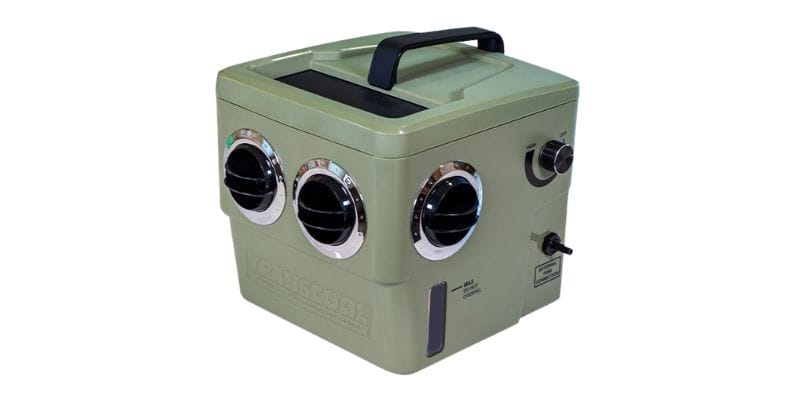
✔ Pros
- True 12V, runs all night off your battery
- Large 5L tank runs long between refills
- Very low power draw, no generator needed
- Add ice water for a real cooling boost
✗ Cons
- Dry heat only, useless in humidity
- Personal and directional, not whole-van
- You wire it in or run leads
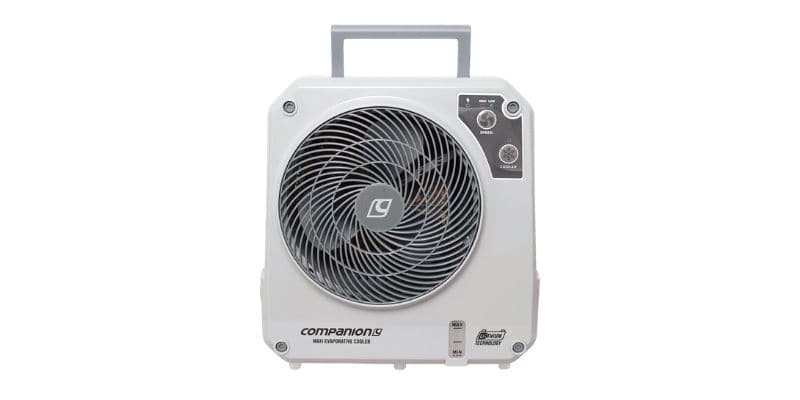
✔ Pros
- No wiring, completely portable
- Strongest airflow of the rechargeables
- Charges from 12V or 240V
- Tilt shut-off and water-level indicator
✗ Cons
- Small tank means frequent refills
- Battery lasts an evening then needs a recharge
- Dry heat only
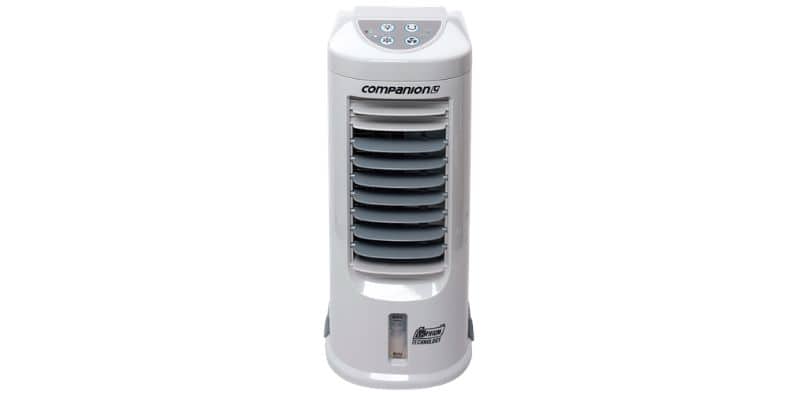
✔ Pros
- Cheapest entry into rechargeable evap
- Longer runtime per charge than the Maxi
- Great for kids, dogs, or a single seat
- Charges from 12V or 240V
✗ Cons
- Small airflow, personal zone only
- Tiny tank needs frequent topping up
- Dry heat only
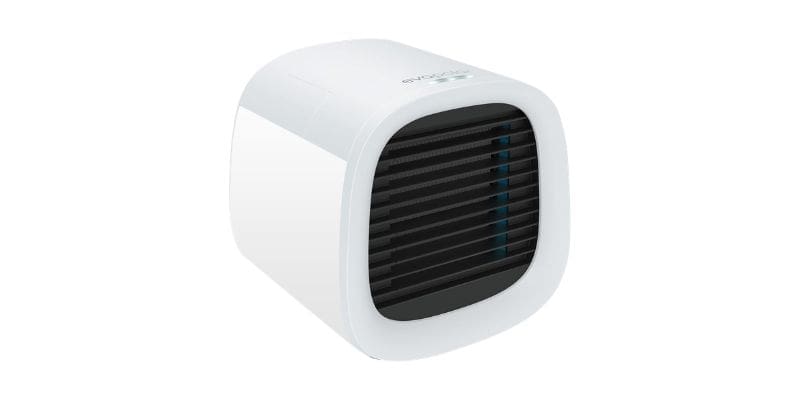
✔ Pros
- Runs off any USB socket or power bank
- Very low power draw
- Quiet enough for calls
- Long runtime per fill
✗ Cons
- Strictly personal, one person one direction
- Cartridge needs occasional replacement
- Dry heat only
The Best Misting Fans and Kits
Misters throw a fine water spray that evaporates and cools the air around the awning. Same rule as the coolers, only more so: brilliant in dry inland heat, pointless to soggy in humidity. These are the tools for the annexe, the dog, and the kids on a dry 40°C afternoon.
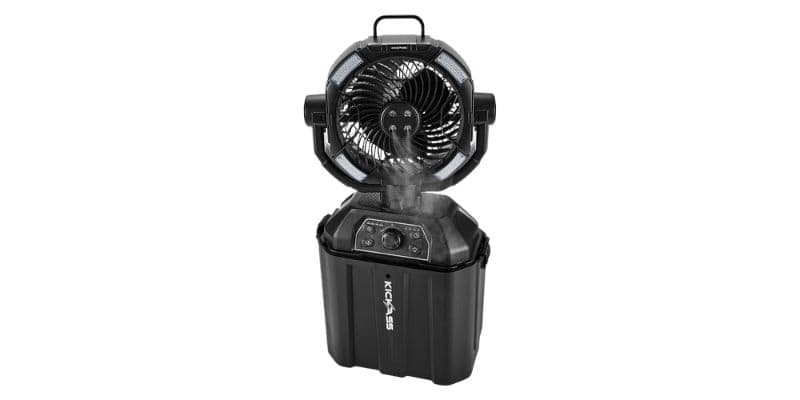
✔ Pros
- Self-contained 6L tank, no tap needed
- Biggest water reservoir here
- Battery doubles as a power bank
- Two misting intensities
✗ Cons
- Useless in humidity
- Misting shortens the runtime
- A fan with mist, not a cooler box
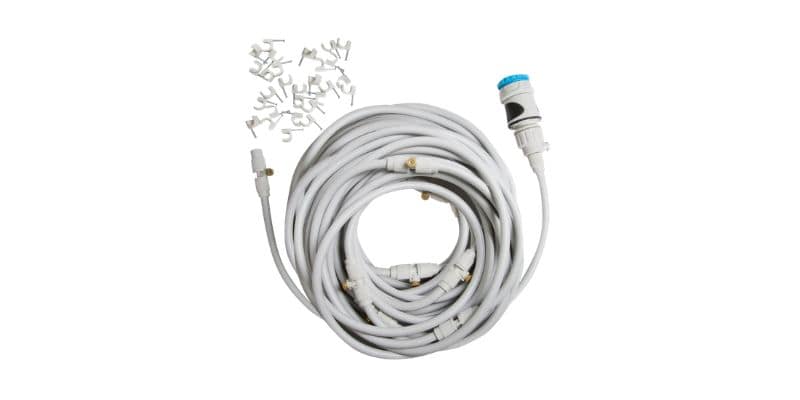
✔ Pros
- Cheapest cooling you can buy
- Runs unlimited while water flows
- No battery to charge
- Brass-nozzle versions resist clogging
✗ Cons
- Needs a water source and pressure
- Cheap nozzles clog in outback water
- Wets everything nearby, dry heat only
Quick Comparison Table
Here is how the picks stack up side by side. Remember every one of these is a dry-heat tool.
| Cooler | Type | Power | Tank | Runtime | Best For | Price |
|---|---|---|---|---|---|---|
| Transcool E3 Best Pick | True 12V evap | 12/24/240V, 0.7–1.7A | 5L external | All night on battery | Off-grid full-timers | ~$299 |
| Companion Maxi Grab-and-Go | Rechargeable evap | 7.4V 6Ah | 1.2L | 3–5.5hr per charge | No wiring, portable | ~$159 |
| Companion Mini Budget | Rechargeable evap | 7.4V 4Ah | 0.9L | 4–6.5hr per charge | Personal, kids, cheapest | ~$79 |
| Evapolar evaCHILL | USB personal evap | Micro-USB 5V/2A | 0.8L | ~9hr per fill | Remote-work desk | ~$99–$129 |
| KickAss Misting Fan | Rechargeable misting fan | 20,000mAh | 6L bucket | 10hr+ fan only | Annexe, outdoor | ~$149 |
| Holman/Nylex Kit | Plumbed misting line | Tap or 12V pump | N/A | Unlimited | Cheap annexe misting | ~$25–$45 |
The Verdict
For the off-grid big lapper crossing dry inland Australia, the Transcool E3 is the clear best pick. It is the only true 12V unit here, it sips under 2 amps, and it will run all night off your lithium with a 5L tank to match. It is sold direct rather than through an affiliate retailer, but it is genuinely the right answer, so we recommend it on merit.
If you would rather not wire anything in, the Companion Maxi is the grab-and-go choice, portable enough to move from van to annexe to chair. The Companion Mini at around $79 is the cheapest honest entry point and perfect for a kid or a dog, and the Evapolar evaCHILL is the one for remote workers who just want to cool their desk. For the outdoor living area, the self-contained KickAss misting fan is the standout, with a cheap Holman or Nylex line as the budget add-on for park stays.
One last time, because it matters: none of these are air conditioners, and all of them are dead weight in the tropics and coastal humidity. If your lap runs through the Top End or a muggy coastal summer, put your money into shade, night ventilation and a good roof or exhaust fan instead, and read the honest aircon guide before you spend a cent on cooling.
- Evaporative and misting coolers only work in dry inland heat. Above roughly 50 to 60% humidity they just make the van damp.
- None of these are air conditioners. They deliver personal, directional cooling, not a whole-van temperature drop.
- The Transcool E3 is the best pick for off-grid travel, the only true 12V unit that runs all night off your battery.
- The Companion Maxi is the best grab-and-go, the Mini the cheapest, and the Evapolar evaCHILL the pick for desk workers.
- For the annexe, the KickAss misting fan carries its own 6L of water; a Holman or Nylex line is the budget option.
- In the tropics, skip all of it and invest in shade, ventilation and a roof fan instead.
Comment (0)