
Everything You Need To Know About Caravan Kitchens and Cooking Equipment
In This Section
Your caravan kitchen needs to function as a real kitchen, not a decorative one. You’ll cook in it two to three times a day for months. It needs to handle breakfast, lunch, dinner, meal prep, and the washing up that follows. Understanding what comes standard, what’s optional, and what actually matters for daily cooking helps you evaluate kitchens when comparing vans and identify what to upgrade or add once you’ve bought one.
Kitchen Fixtures & Fittings
Most kitchen fixtures are decided at the manufacturing stage, but there’s more flexibility than you might expect. If you’re building new, you can often select cooktop type, oven configuration, fridge size, and sink style from your manufacturer’s options list. If you’re buying used, you can evaluate what’s already installed and plan upgrades or modifications from there. Either way, understanding your options helps you make better decisions about what matters most for the way you cook.
Cooktop
A cooktop can live inside the van or outside, and that distinction matters more than most people realise when they’re first planning a trip.
Inside: Most Australian caravans come with a gas cooktop as standard, typically 3 or 4 burners running on LPG. Gas is the default because it works anywhere without needing power, heats quickly, and behaves like a normal stove. A 3-burner is sufficient for most couples. A 4-burner gives more flexibility for families or anyone who regularly cooks multi-dish meals.
Induction cooktops are now appearing in some newer caravans, and some people are choosing them specifically to free up bench space. Because an induction cooktop sits flush and has no raised burners, it doubles as a prep surface when not in use. They’re efficient, easy to clean, and give precise heat control. The trade-off is power: induction needs 240V, which means mains hookup or a large inverter and battery system. Not ideal for frequent off-grid travellers.
Outside: Some travellers prefer to cook outside to keep heat, smells, and steam out of the van entirely. A portable gas stove set up on the annexe table is one of the most common solutions. It costs next to nothing extra, packs away easily, and keeps your internal cooktop free for wet weather or cold nights. Some caravans also have a dedicated external gas point so you can run a portable stove or BBQ directly from the van’s LPG supply.
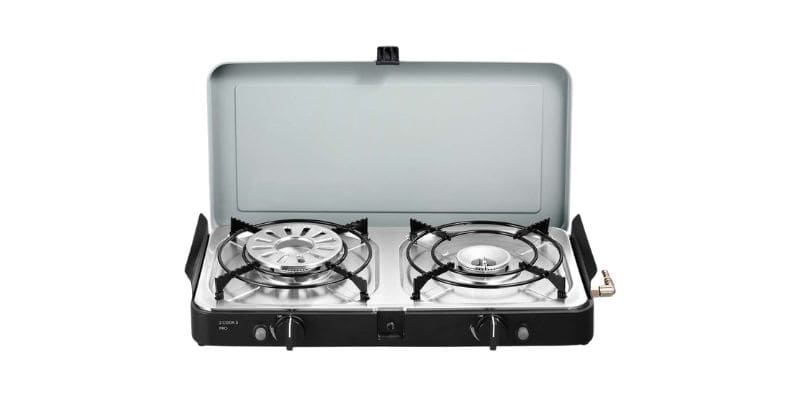
~$450
Oven
Ovens divide Big Lappers into two camps: those who use them constantly and those who never open them. If you bake bread, roast meat, or cook casseroles at home, you’ll want an oven on the road. If you don’t cook that way at home, you won’t start on the road.
Most caravan ovens are compact gas ovens that work well but have quirks: hot spots, uneven heating, and a learning curve. 3-in-1 systems are increasingly popular because they combine oven, grill, and cooktop in one compact unit, which saves space and reduces the number of appliances you need to manage. Rather than a separate cooktop and oven taking up two distinct cabinet spaces, a 3-in-1 handles both in a single footprint. Some people who know they won’t bake or roast choose to replace the oven entirely with extra storage.
~$1,299
Fridge
The fridge is arguably the most important kitchen appliance. It determines how long you can go between grocery shops and how much fresh food you can carry. Two main types dominate the caravan market:
Compressor fridge: Works like a home fridge but runs on 12V power. Efficient, reliable, and cools consistently regardless of ambient temperature. The preferred option for Big Lap travel because it handles Australian heat well and runs from your battery system.
3-way fridge (absorption): Runs on 12V, 240V, or gas. Common in older caravans and some new budget models. Works well in moderate temperatures but struggles in extreme heat (above 35°C). Less efficient on 12V than a compressor fridge. If your caravan has a 3-way fridge and you’ll be travelling through hot climates, consider upgrading to a compressor model.
Size: 150L is the minimum for a couple doing regular town visits. 180 to 220L is more comfortable and allows longer gaps between shops. Families need 200L+ or supplement with a portable 12V fridge/freezer in the car.
Microwave
A microwave requires 240V power (either mains hookup or a large inverter). It’s convenient for reheating leftovers and quick meals but not essential. Many Big Lappers remove the microwave after a few months to save weight and reclaim bench or storage space. If you’re primarily free camping, a microwave sits unused most of the time.
Sink
A deep, single-bowl sink is more practical than a double bowl in a caravan. You need depth to fill pots and wash dishes. Double bowls sound useful but each side is too small to be functional. Look for stainless steel construction and a good tap with adequate clearance above the sink.
Slide Out Pantry vs No Pantry
A slide-out pantry maximises storage in narrow kitchen spaces, giving you easy access to items at the back without unpacking everything in front. The trade-off is cost and complexity: more moving parts that can break or bind up. A fixed pantry with good internal organisation can work just as well and costs less. Your choice depends on how much you value the convenience versus mechanical simplicity.
External Cooking Options
Outdoor cooking keeps heat and cooking smells outside, extends your living space, and gives you options when the weather is good. Three main approaches dominate external cooking for Big Lappers.
BBQs
A portable gas BBQ is standard equipment for most Big Lap travellers. It handles everything from breakfast bacon to dinner steaks, works in any weather, and sets up quickly. Weber Q models dominate the caravan market because they’re compact, reliable, and built to travel.
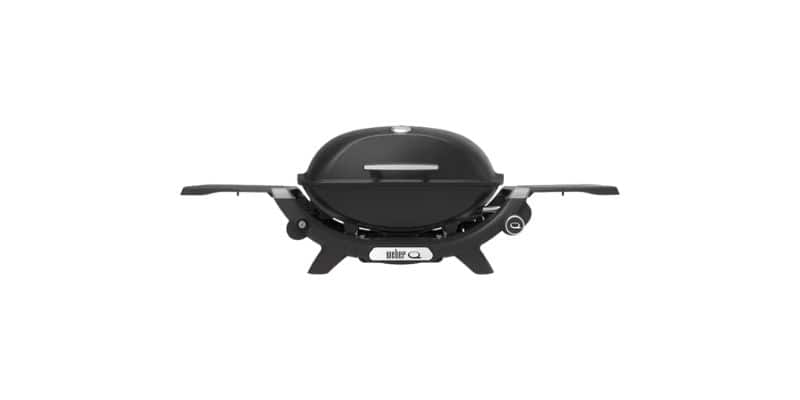
~$399
Comment (0)