
The cassette toilet has been the default in Australian caravans for decades. It works, it’s simple, and every van comes with one. But composting toilets have gone from fringe eco-option to genuine mainstream contender in the last few years. They cost more upfront, but the promise of less frequent emptying, no chemicals, and reduced dump point dependence is compelling for Big Lappers who spend serious time off-grid. So which is actually better for extended travel?
How Cassette Toilets Work
A cassette toilet is a flush toilet with a sealed waste tank, the cassette, built into the base. When you flush, a small amount of water and chemical solution washes waste into the cassette. The chemicals break down solids and control odour. When the cassette is full, you pull it out through an external hatch, wheel it to a dump point, empty it, rinse it, add fresh chemical, and slide it back in.
Capacity: Most cassettes hold 17 to 20 litres. A couple will get three to five days from a single cassette with regular use. A family of four is looking at one to two days. These numbers assume you’re using the caravan toilet for everything. If you use public amenities during the day, the cassette lasts longer.
Cost: A replacement cassette toilet runs roughly $800 to $1,500 depending on the model. Toilet chemicals cost $15 to $30 per bottle and last several refills. The ongoing cost is modest.
What people like: Familiar sit-down toilet experience. The flush mechanism feels normal. Simple, proven technology. Replacement parts and chemicals are easy to find anywhere in Australia, and every caravan dealership and accessory shop stocks them.
What people don’t like: Emptying the cassette is the least glamorous chore on the Big Lap. It’s not terrible, but it’s not pleasant either, especially on a hot day. You’re dependent on dump points. The chemicals have a distinctive smell that some people find worse than what they’re supposed to be masking. And in a small caravan bathroom, a full cassette adds real weight.
If your cassette toilet is tired but functional, you often don’t need a whole new unit. A Thetford Freshup Set gives you a brand new cassette and seat for a fraction of the price of a full replacement.
How Composting Toilets Work
A composting toilet separates liquids from solids using a diverter built into the bowl. Urine goes into a removable bottle at the front, typically 6.5 to 9 litres. Solid waste drops into a lower chamber filled with a composting medium, usually coconut coir or peat moss. A small 12V fan runs to evaporate moisture and promote aerobic decomposition. After use, you turn a handle to mix the composting medium through the solids. Because the solids stay dry and separated, they break down rather than turning into the sewage slurry you get in a cassette.
Capacity: The liquid bottle needs emptying every one to three days for a couple, and it can be poured down any toilet or dump point. The solids bin is where the real gain is: three to six weeks for two people, depending on the model. Nature’s Head claims up to 80 uses before emptying, which is around six weeks for a couple. The Cuddy is a smaller unit and runs closer to two to three weeks. The composted material can go in a general waste bin or be buried.
Cost: Expect roughly $1,200 to $2,000 for a quality unit. Coconut coir bricks are the only ongoing consumable at a couple of dollars each, and you use one per refill. No chemicals at all.
What people like: No chemicals. Dramatically less dump point dependency for solids. Less odour than most people expect, because separation is what causes the stink in a cassette, not the waste itself. Lighter than a full cassette. The liquid bottle is quick and inoffensive to empty. Many Big Lappers who’ve switched say they’d never go back.
What people don’t like: The seat position is different, and you need to sit down for everything, because the diverter only works when you’re seated properly. There’s a learning curve for the household. The upfront cost is higher. Most units need 12V power for the fan and a small vent through the wall, though the Cuddy can run on an internal carbon filter without external venting. And if the composting balance goes wrong, usually too wet or not enough medium, it can smell bad.
A SOG ventilation system is not compatible with any composting toilet. If you’ve already fitted SOG to your cassette, factor that into the switch. Always check local council and national park rules before burying or disposing of solids in conservation areas.
Head-to-Head Comparison
| Factor | Cassette Toilet | Composting Toilet |
|---|---|---|
| Upfront Cost | $800 to $1,500 | $1,200 to $2,000 |
| Ongoing Cost | $50 to $100/year (chemicals) | $20 to $40/year (coir bricks) |
| Emptying (couple) | Everything, every 3 to 5 days | Liquids every 1 to 3 days, solids every 3 to 6 weeks |
| Dump Point Dependency | High: need a dump point every few days | Low: liquids in any toilet, solids in general waste |
| Odour | Chemical smell constant, can be strong on hot days | Minimal when working correctly, earthy not chemical |
| Weight | Light empty, 18 to 23 kg with a full cassette | Around 9 to 12 kg, and liquids carried separately |
| Water Usage | Flush water on every use | Zero water |
| Power Usage | None | Small 12V fan, negligible draw |
| Ease of Use | Familiar: sit, flush, done | Learning curve: sit properly, turn the handle after solids |
| Installation | Standard in most caravans | Retrofit: remove cassette, run 12V, usually add a vent |
| Best For | Caravan parks, families, keeping it simple | Off-grid campers, couples, anyone who hates emptying cassettes |
The Emptying Experience
This is where the real difference lies. Emptying a cassette means wheeling a sealed tank of liquefied sewage to a dump point, pouring it out, and rinsing it. It’s not awful, but it’s never enjoyable, and you’re doing it every few days.
Emptying a composting toilet means pouring a bottle of urine down a toilet, no different to normal, every few days, then bagging up composted material every few weeks. When the system is working properly the solids look and smell like damp soil. Most people find that significantly less unpleasant, and the reduced frequency is the real win.
For Families
Families produce more waste, faster. A cassette for a family of four means emptying every day or two, which gets old quickly on a long trip. A composting toilet helps with solids frequency, but the liquid bottle fills faster with more users. The bigger consideration is that kids need to learn the sit-down, separate technique, which takes some coaching for younger children. Some families find this a non-issue. Others find it a constant battle with a five-year-old.
For Off-Grid Camping
If you spend significant time free camping away from dump points, a composting toilet is the clear winner. Cassettes tie you to dump points every few days, which limits how far off the beaten track you can go. Composting extends your self-sufficiency dramatically: you only need a toilet or dump point for liquids, and solids go in a waste bin whenever you pass one. On a run like the Gibb River Road, where dump points are scarce, that’s the difference between planning around your toilet and forgetting it exists.
Our Recommendations
Cassette Toilets
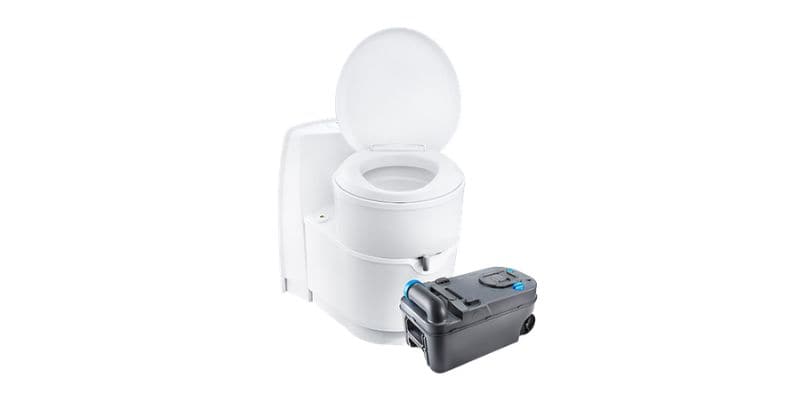
~$1,000 to $1,400
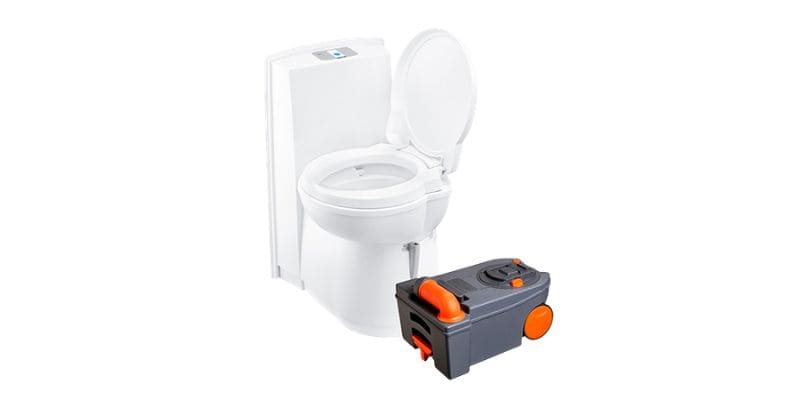
~$1,200 to $1,500
For larger vans, the Thetford C403L ~$1,300 to $1,600 steps up to a 19.3-litre cassette, which buys a family an extra day between empties. Check the entry side before ordering, as it comes in left and right hand versions.
Composting Toilets
None of the composting brands sell through the retailers we partner with, so the links below go direct to the Australian distributors. We’d rather point you at the right toilet than the one that pays us.
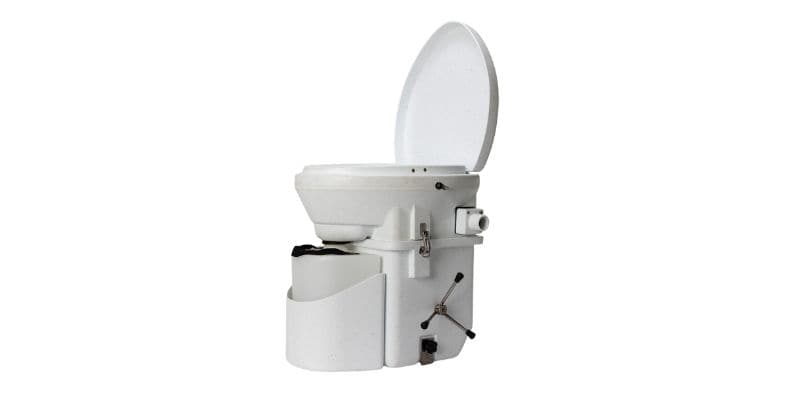
~$1,600 to $1,900
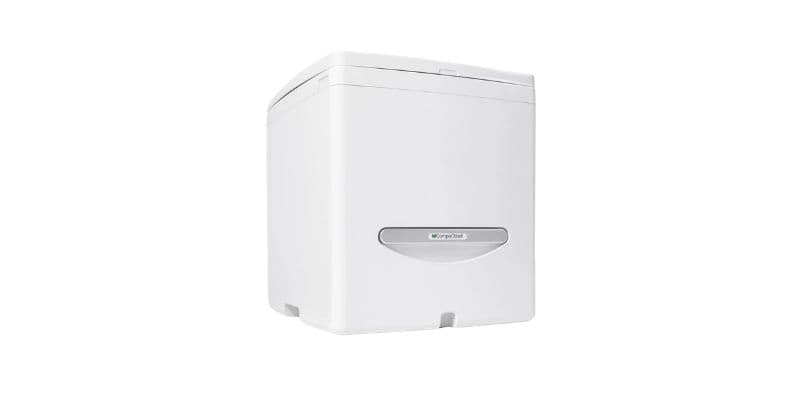
~$1,188
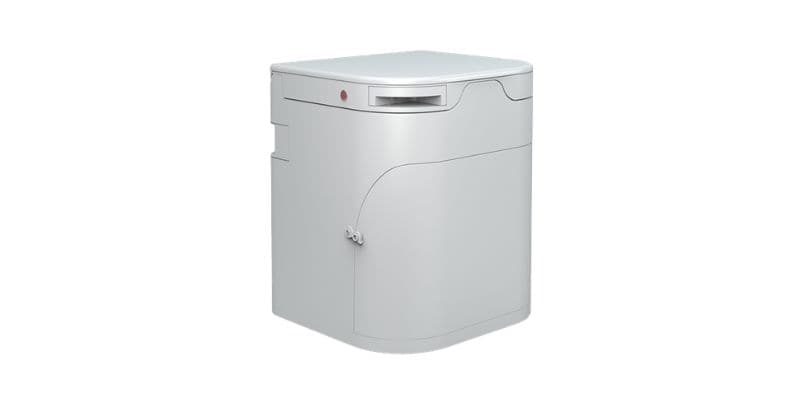
~$1,500 to $1,800
Worth knowing: the Separett Tiny is a fourth option that some premium van builders favour. It’s a urine diverter rather than a true composting toilet, using a sealed compostable bag for solids instead of a coir medium. You remove and bin the bag rather than emptying a chamber, which some people find more hygienic and much simpler. There’s no composting happening, so the solids dry out rather than break down.
Which One Should You Choose?
Stick with the cassette if: you mostly stay at caravan parks where dump points are steps away, you don’t want to retrofit anything, you’re travelling with young kids who’d struggle with the composting technique, or you prefer the simplest possible setup with no learning curve. There’s nothing wrong with a cassette toilet. Millions of caravanners use them without complaint.
Switch to composting if: you plan to spend a lot of time free camping, you hate the cassette emptying routine, you want to cut water use to zero, or you’re doing a longer lap where the reduced chemical and dump point dependency really adds up. The upfront cost is higher, but the daily experience is better for most people who make the switch.
One middle ground: keep the cassette for the first few months and see how dump point access actually affects your travel style. If you find yourself planning routes around dump points or cutting off-grid stays short because the cassette is full, that’s your answer.
If you’re buying a new caravan and leaning towards composting, ask the manufacturer to fit it from the factory. Retrofitting is straightforward, but having it done at build ensures the vent and 12V power are integrated properly.
- Cassette toilets are simple, proven, and fine if you stay near dump points. The emptying is unpleasant but quick.
- Composting toilets cost more upfront but dramatically reduce dump point dependency and eliminate chemicals entirely.
- For extended off-grid camping, composting is the better choice. For caravan park travel, a cassette is perfectly adequate.
- Capacity is the thing to compare: Nature’s Head for the longest run between empties, Cuddy for the easiest install, OGO for the least hands-on.
- Families should factor in whether young kids can manage the composting technique before switching.
Comment (0)